


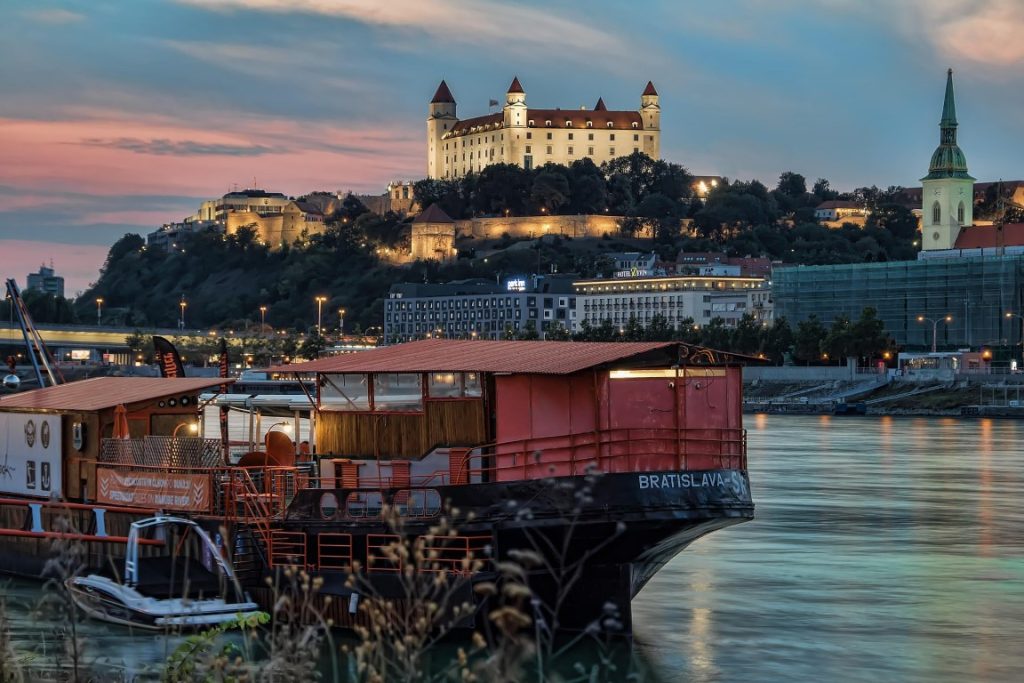
Bratislava may be one of Europe’s smallest capital cities, but that’s exactly what makes it so easy to fall in love with. Compact, walkable and full of history, it’s the perfect destination if you’d like to escape Budapest for a day without spending hours on the road.
I’ve visited Bratislava several times over the years, and I always enjoy going back. Every visit feels a little different, yet I somehow end up doing the same things: wandering through the charming Old Town, stopping for coffee on a sunny square, climbing up to the castle for the views, and finishing the day with a glass of local Slovak wine.
One of the things that makes Bratislava so unique is its location. It’s the only capital city in the world that borders two independent countries, Austria and Hungary, making it an easy addition to any Central European itinerary. Vienna is only about an hour away, while Budapest can be reached in around two and a half hours by train.
Despite its small size, Bratislava has played an important role throughout history. For more than 250 years, it served as the coronation city of the Kingdom of Hungary, where eleven Hungarian kings and eight queens were crowned in St. Martin’s Cathedral after the Ottoman occupation of Buda.
The best part? You don’t need a packed itinerary to enjoy Bratislava. Most of the main attractions are within walking distance, leaving plenty of time to sit on a terrace, sample traditional Slovak food or simply enjoy the city’s relaxed atmosphere.
If you’re looking for an easy day trip from Budapest, Bratislava is one of my favorite recommendations.
How to Get to Bratislava from Budapest
One of the biggest advantages of visiting Bratislava is how easy it is to reach from Budapest. Whether you prefer travelling by train, bus or car, the Slovak capital makes a fantastic day trip or an easy weekend getaway.
By Train (My Favorite Option)
Taking the train is by far the most convenient way to visit Bratislava. Direct trains leave regularly from Budapest Nyugati Railway Station and arrive at Bratislava hlavná stanica in approximately 2 hours and 25 minutes. From the train station, you can either walk for around 20–25 minutes to the Old Town or take a local bus or tram.
If you’re planning just a day trip, the train is usually the easiest and most relaxing option.
By Bus
Several companies, including FlixBus and RegioJet, operate direct services between Budapest and Bratislava. Depending on traffic, the journey usually takes between 2 and 3 hours, and buses often stop closer to the city centre than trains.
By Car
I’ve also driven to Bratislava several times, and it’s an easy journey almost entirely on the motorway. The drive takes around 2 hours, depending on traffic and the border area.
If you’re travelling by car, keep in mind that Slovakia requires an electronic motorway vignette for using motorways. Parking is available throughout the city centre, although public parking can fill up quickly on weekends.
Can You Visit Bratislava in One Day?
Absolutely. Bratislava’s historic centre is compact and easy to explore on foot, making it one of the best day trips from Budapest. You’ll have enough time to visit the main attractions, enjoy a leisurely lunch, stop for coffee (or a glass of local wine), and still be back in Budapest the same evening.
Best Things to Do in Bratislava
One of the reasons I enjoy visiting Bratislava so much is that you don’t need to rush from one attraction to another. The historic centre is compact, easy to explore on foot, and most of the city’s highlights are just a few minutes apart.
My advice? Skip the checklist mentality. Wander through the Old Town, stop whenever a café catches your eye, and leave some room for spontaneous discoveries. That’s when Bratislava is at its best.
Here are my favorite places to visit, listed in a route that feels natural to explore on foot.
Michael’s Gate
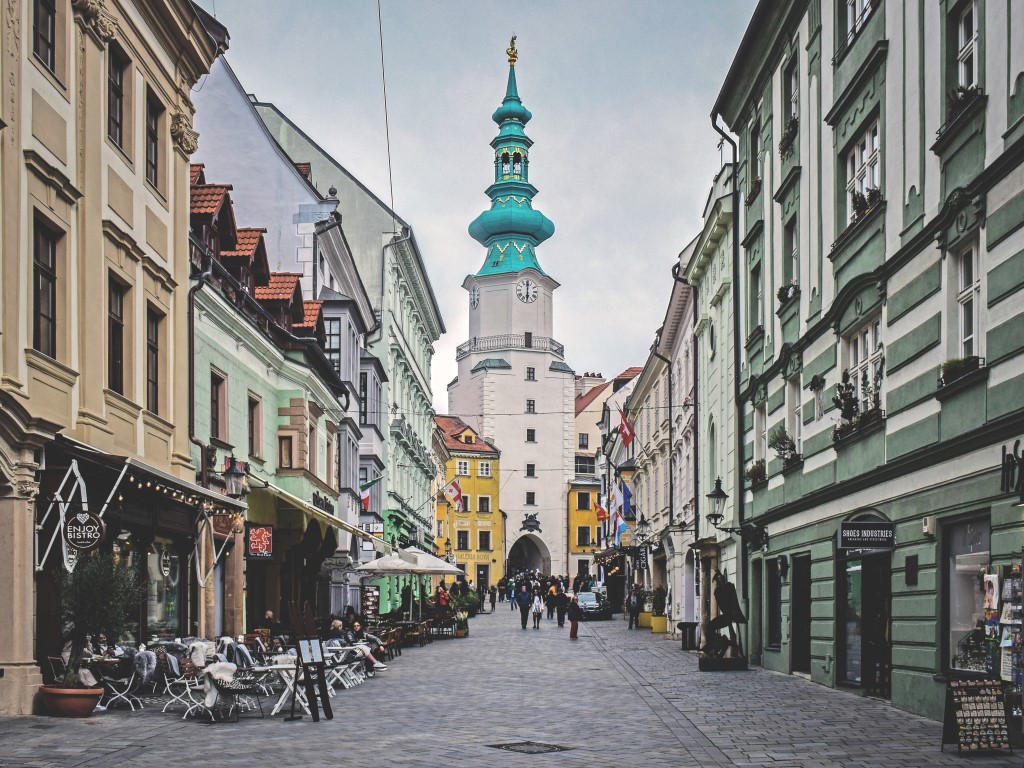
The best place to start exploring Bratislava is Michael’s Gate, the last remaining medieval city gate and one of the city’s most recognizable landmarks. For centuries, this was the main entrance to the fortified Old Town, and today it’s still the gateway to the historic centre.
After an extensive restoration, the tower has reopened to visitors, offering beautiful panoramic views over Bratislava’s rooftops. Even if you don’t plan to climb to the top, it’s worth taking a moment to admire the elegant green copper roof before walking through the gate into the maze of charming streets beyond.
From here, simply follow Michalská Street and let yourself get a little lost. Some of my favorite moments in Bratislava aren’t spent at famous landmarks, but while wandering these narrow pedestrian streets, discovering hidden courtyards, cozy cafés and small local shops along the way.
Old Town Hall, Main Square & Roland’s Fountain
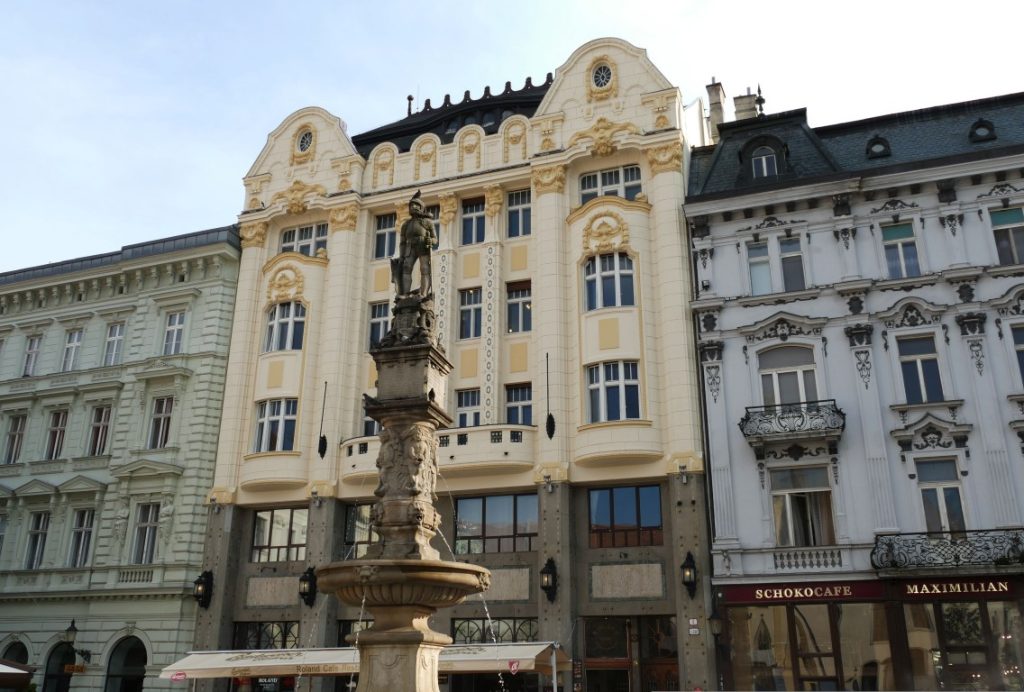
Soon you’ll arrive at Hlavné námestie, Bratislava’s beautiful Main Square and the heart of the Old Town. Surrounded by colourful historic buildings, outdoor cafés and lively terraces, it’s one of those places where it’s easy to slow down and simply enjoy the atmosphere.
The square is home to the Old Town Hall, one of the oldest stone buildings in Bratislava. If it’s open during your visit, I highly recommend climbing the tower for lovely views over the red rooftops of the historic centre. Inside, you’ll also find the Bratislava City Museum, where you can learn more about the city’s fascinating past.
Standing proudly in the middle of the square is Roland’s Fountain, also known as Maximilian’s Fountain, the oldest public fountain in Bratislava. Built in 1572, it has watched over the square for centuries and remains one of the city’s most iconic landmarks.
Like many historic places in Bratislava, the fountain comes with its own legend. Locals say that every New Year’s Eve at midnight, the knight standing on top of the column turns and bows towards the Old Town Hall. Whether you believe the story or not, it’s one of those charming local tales that makes Bratislava feel even more special.
Primate’s Palace
Just around the corner from the Main Square stands one of Bratislava’s most elegant buildings, the pastel pink Primate’s Palace. At first glance it may look like just another beautiful historic palace, but it has played an important role in European history.
The palace is best known for its magnificent Hall of Mirrors, where the Peace of Pressburg was signed in 1805 following Napoleon’s victory at the Battle of Austerlitz. If you decide to step inside, you’ll also discover an impressive collection of rare 17th-century English tapestries that were hidden within the palace walls for centuries before being rediscovered during renovations.
Even if you only admire it from the outside, it’s one of the most photogenic buildings in Bratislava’s Old Town.
Grassalkovich Palace (Presidential Palace)
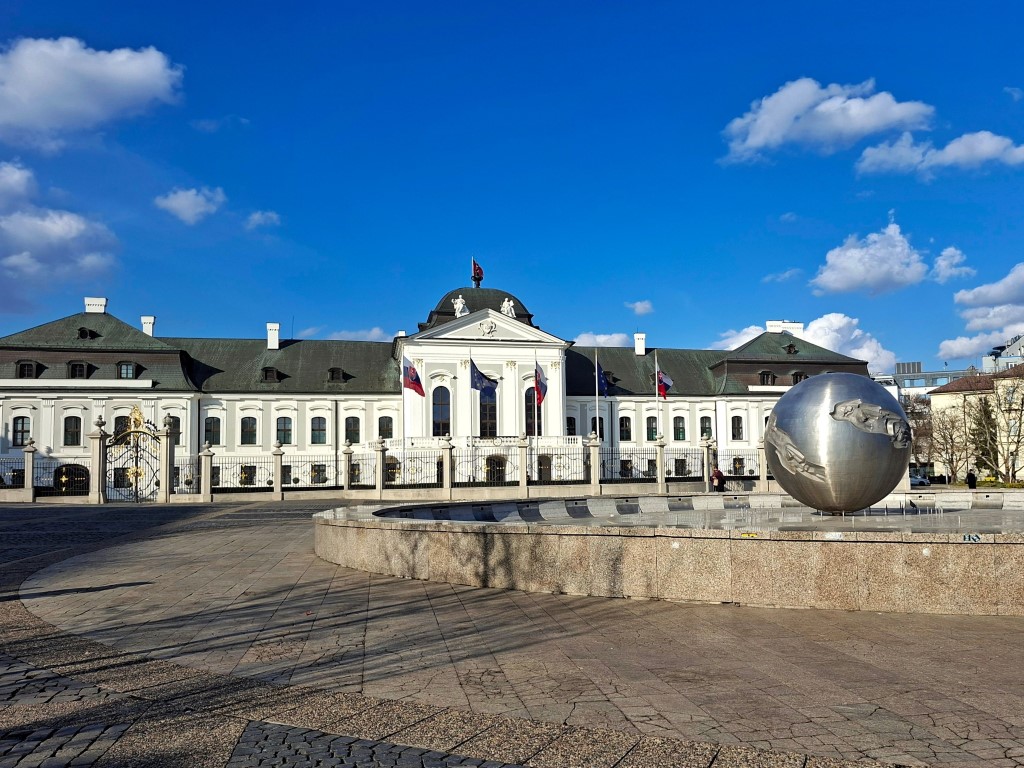
From the Old Town, it’s only a pleasant ten-minute walk to Grassalkovich Palace, the official residence of the President of Slovakia.
Built in 1760 for Count Antal Grassalkovich, a close advisor to Empress Maria Theresa, the Rococo palace was once the setting for lavish aristocratic celebrations. Today, while the palace itself isn’t open to visitors, you can admire its elegant façade from Hodžovo Square before taking a stroll through the beautifully maintained gardens behind it.
The peaceful park is open to the public and offers a welcome break from sightseeing. With shady trees, fountains and plenty of benches, it’s the perfect place to slow down for a few minutes before continuing your walk through the city.
From here, you can either continue towards the Blue Church, one of Bratislava’s most photographed landmarks, or take a short detour for coffee before carrying on.
Blue Church
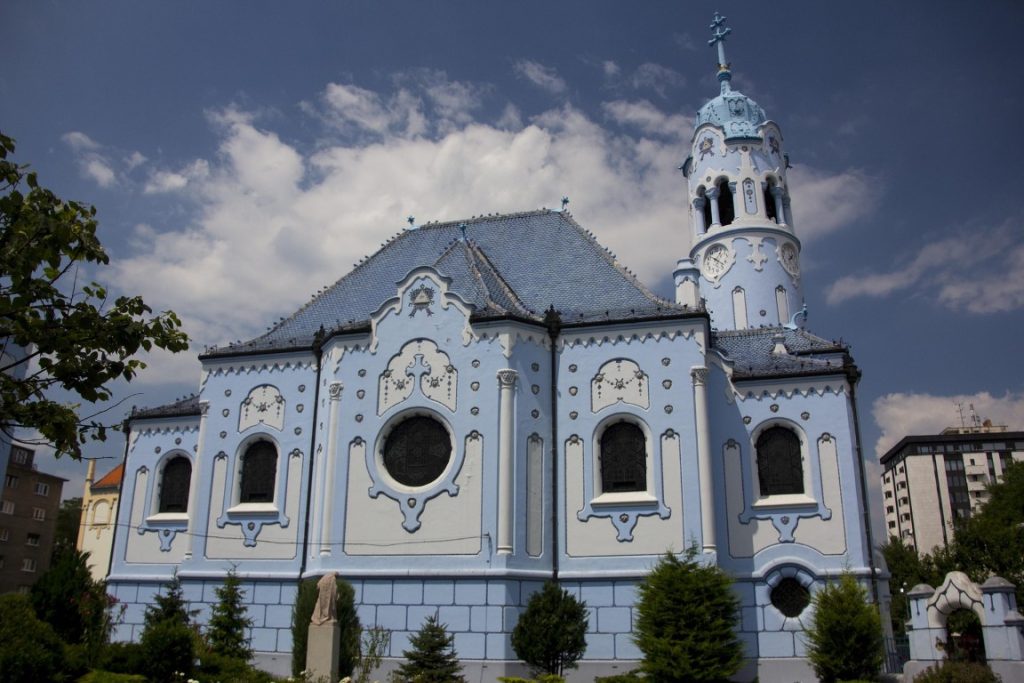
Even if you’ve visited dozens of churches across Europe, the Blue Church is unlike anything you’ve seen before. Officially called the Church of St. Elizabeth of Hungary, it’s one of Bratislava’s most photographed landmarks, and it’s easy to understand why.
Designed by the renowned Hungarian architect Ödön Lechner, the church is a masterpiece of the Hungarian Art Nouveau style, often referred to as Hungarian Secession. Soft shades of blue cover almost every detail, from the walls and decorative tiles to the roof and even parts of the interior, giving the building an almost fairytale-like appearance.
This is easily one of my favorite places in Bratislava. Every time I visit, I end up stopping for a few minutes just to admire its unique architecture. It feels completely different from the grand Gothic and Baroque churches you’ll find elsewhere in Central Europe.
The Blue Church sits about a 10-minute walk from the Old Town, but it’s absolutely worth the short detour. If you’re planning your Bratislava itinerary, don’t skip it. It’s one of those places that looks even more beautiful in real life than in photos.
If you enjoy photography, try visiting early in the morning, when there are fewer people around and the soft light makes the pastel blue colors look even more magical.
St. Martin’s Cathedral
Just a short walk from the Old Town stands St. Martin’s Cathedral, one of Bratislava’s most important historical landmarks and a place with deep ties to Hungarian history.
After the Ottoman Empire occupied Buda in the 16th century, Bratislava became the coronation city of the Kingdom of Hungary. Between 1563 and 1830, eleven Hungarian kings and eight queens were crowned inside this Gothic cathedral, making it one of the most significant royal churches in Central Europe.
As you approach the cathedral, don’t forget to look up. The top of its 85-meter tower is crowned with a gilded replica of the Hungarian Holy Crown, weighing around 300 kilograms. It’s a subtle but powerful reminder of the city’s royal past.
The cathedral itself is beautiful both inside and out, with soaring Gothic architecture, peaceful chapels and impressive Baroque artwork. Even if you’re not particularly interested in history, it’s well worth stepping inside for a few quiet moments away from the busy streets outside.
If you happen to visit Bratislava in early September, you may even catch the annual Coronation Days Festival, when the city brings its royal past back to life with historical processions, traditional costumes and medieval celebrations.
Bratislava Castle
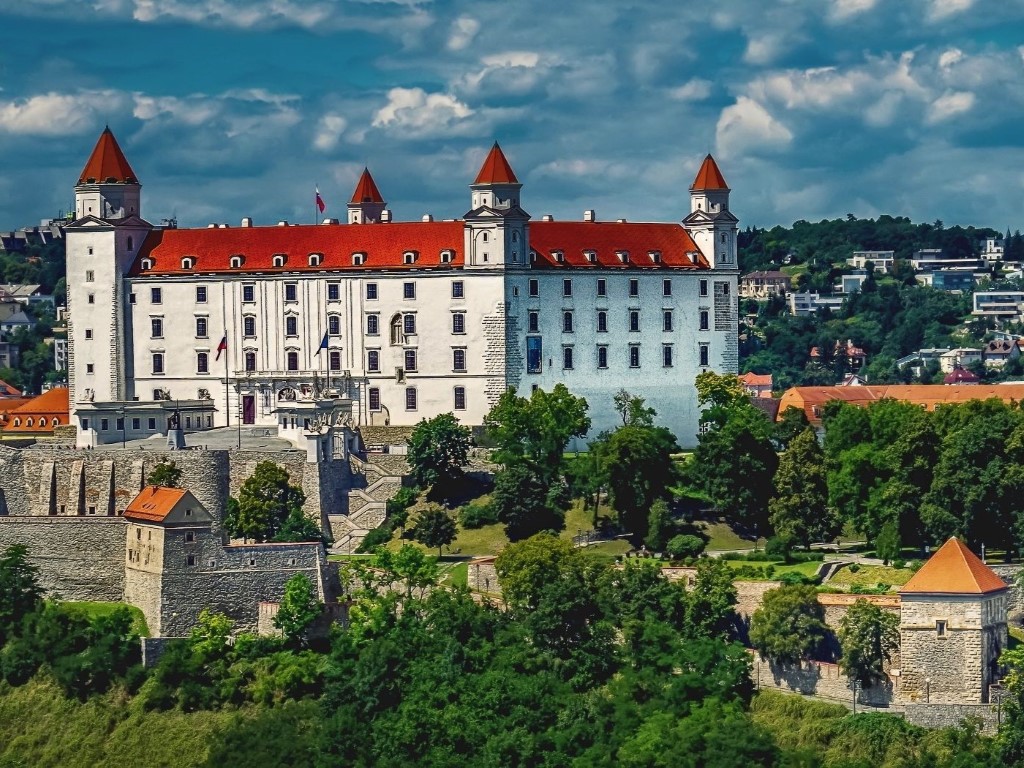
Perched high above the Old Town, Bratislava Castle is impossible to miss. With its distinctive white walls and four corner towers, it dominates the city’s skyline and offers some of the best panoramic views in Bratislava.
The walk uphill is surprisingly manageable, and once you reach the top, you’ll be rewarded with sweeping views over the Danube, the historic centre and, on a clear day, even parts of Austria and Hungary. It’s one of my favorite viewpoints in the city and a place I always return to whenever I visit Bratislava.
The castle has witnessed centuries of Central European history and once served as an important royal residence within the Kingdom of Hungary. Today, it houses the Slovak National Museum – Museum of History, where visitors can learn more about Slovakia’s past through permanent and temporary exhibitions.
Even if museums aren’t really your thing, I still recommend making the climb. Stroll around the castle grounds, take in the views, and enjoy one of the most iconic panoramas in the city before heading back down towards the Danube.
Slavín Memorial
If you don’t mind walking a little farther, or hopping into a taxi for a few minutes, Slavín Memorial rewards you with one of the most spectacular views over Bratislava.
Built in memory of the Soviet soldiers who lost their lives during the liberation of the city in 1945, the monumental memorial stands on a hill overlooking the Slovak capital. Regardless of its complex historical background, it’s a peaceful place to pause for a while and admire the panorama stretching across the Old Town, the Danube and the surrounding hills.
I especially like coming here later in the afternoon, when the light becomes softer and the city slowly starts to glow. It’s much quieter than the castle and feels like one of Bratislava’s hidden viewpoints.
Čumil – The Man at Work
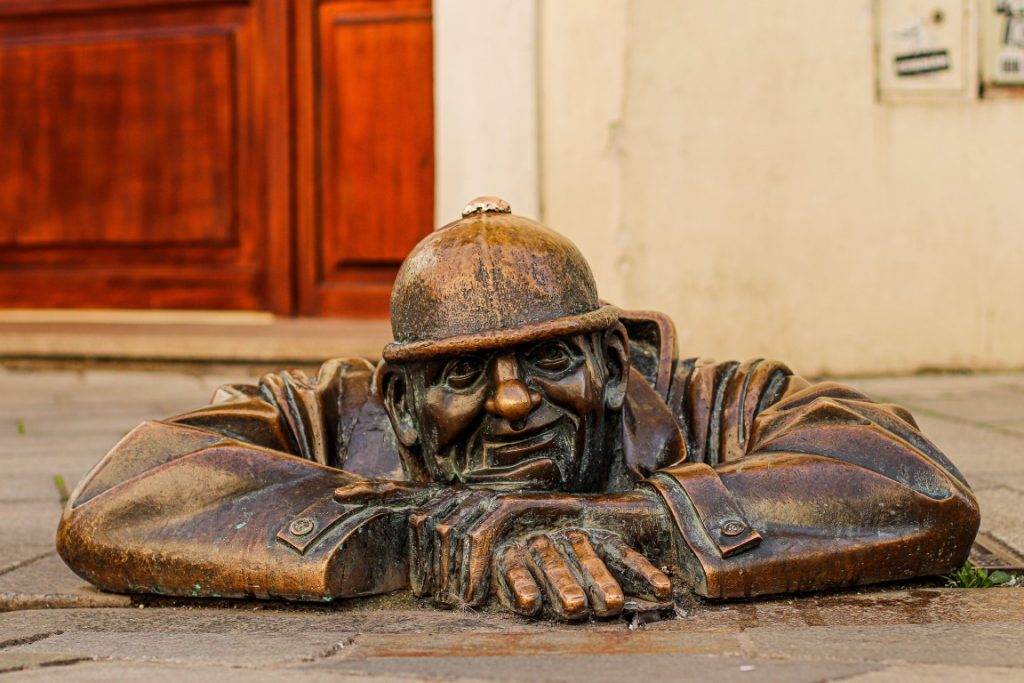
No visit to Bratislava is complete without saying hello to Čumil, the city’s most famous bronze statue.
Peeking out of a manhole in the middle of the Old Town, this quirky little character has been making visitors smile since 1997. Officially called The Man at Work, Čumil has become Bratislava’s most photographed landmark, and you’ll probably find a small queue of people waiting to take a selfie with him.
Fun fact: after several drivers accidentally hit the statue over the years, the city installed the now-famous “Man at Work” traffic sign to help protect him.
It’s a quick stop, but one of those little details that gives Bratislava its playful personality.
More Places Worth Visiting
If you have a little extra time, or you’re visiting Bratislava for a second (or third!) time, there are a few more places that are well worth adding to your itinerary.
Pálffy Palace
Art lovers shouldn’t miss Pálffy Palace, one of the exhibition venues of the Bratislava City Gallery. Alongside works by Slovak and European artists, the palace is home to one of Bratislava’s most fascinating art installations: Passage by Matej Krén.
Created from nearly 15,000 books and cleverly placed mirrors, the installation creates the illusion of an endless library stretching into infinity. It’s one of the city’s most photographed indoor attractions and definitely worth seeing if you’re interested in contemporary art.
As a little personal sidenote, my mother’s maiden name is Krén, so seeing Matej Krén’s name here immediately caught my attention. Whether we’re actually related is anyone’s guess, but it’s one of those small coincidences that always makes me smile. My grandfather’s family originally came from St. Pölten in Austria, so visiting Bratislava also reminds me how closely connected this region has always been. Long before today’s borders existed, people, ideas and families moved freely across what was once the Austro-Hungarian Empire. I sometimes wonder whether my ancestors travelled through this very region on their way to Hungary.
Reduta
Just a short walk from the Danube stands the magnificent Reduta, home of the Slovak Philharmonic Orchestra.
Completed in the early 20th century by Hungarian architects Marcell Komor and Dezső Jakab, the elegant building regularly hosts concerts and cultural events. Even if you don’t attend a performance, it’s worth stopping for a moment to admire its beautiful architecture while exploring the riverside area.
Museum of Clocks
One of Bratislava’s more unusual museums is the Museum of Clocks, housed inside the beautiful rococo House of the Good Shepherd.
The small collection showcases historic clocks, pocket watches and sundials dating from the 17th to the 19th centuries. It’s a charming little museum that can easily be visited in less than an hour if you’re looking for something a bit different.
Where to Eat & Drink in Bratislava
One of my favorite things about visiting Bratislava is that eating out never feels rushed. The city is compact, so it’s easy to stop for a long lunch, enjoy a coffee break in the afternoon or end the day with dinner overlooking the Danube.
These are the places I’ve personally visited over the years and happily return to whenever I’m back in the Slovak capital.
Zylinder
If I could recommend just one traditional restaurant in Bratislava, Zylinder would probably be it.
Located on the elegant Hviezdoslav Square, this beautiful restaurant celebrates the culinary traditions of the former Austro-Hungarian Monarchy with a modern twist. It’s one of those places where every dish feels thoughtfully prepared, and choosing what to order is honestly the hardest part.
I’ve had lunch here several times over the years, and on one visit I even brought my mum with us. It’s become one of those restaurants I naturally associate with Bratislava, and I always enjoy returning whenever I’m in the city.
Slovak Pub
Another place we never seem to skip is Slovak Pub.
It’s centrally located, close to the hotel where we usually stay, making it an easy choice after a long day of sightseeing. The atmosphere is lively, portions are generous and it’s a great place to try traditional Slovak comfort food without spending a fortune.
If you’re visiting Bratislava for the first time, this is an excellent introduction to local cuisine.
Mondieu
No trip to Bratislava is complete without stopping at Mondieu.
This is my Cuban husband’s favorite café in the city, so coffee and cake here have become a little tradition for us. With several locations around Bratislava, it’s an easy place to escape for an hour, recharge your batteries and watch the world go by.
Sometimes it’s the little traditions that make a destination feel familiar, and for us, Mondieu is definitely one of them.
UFO Restaurant
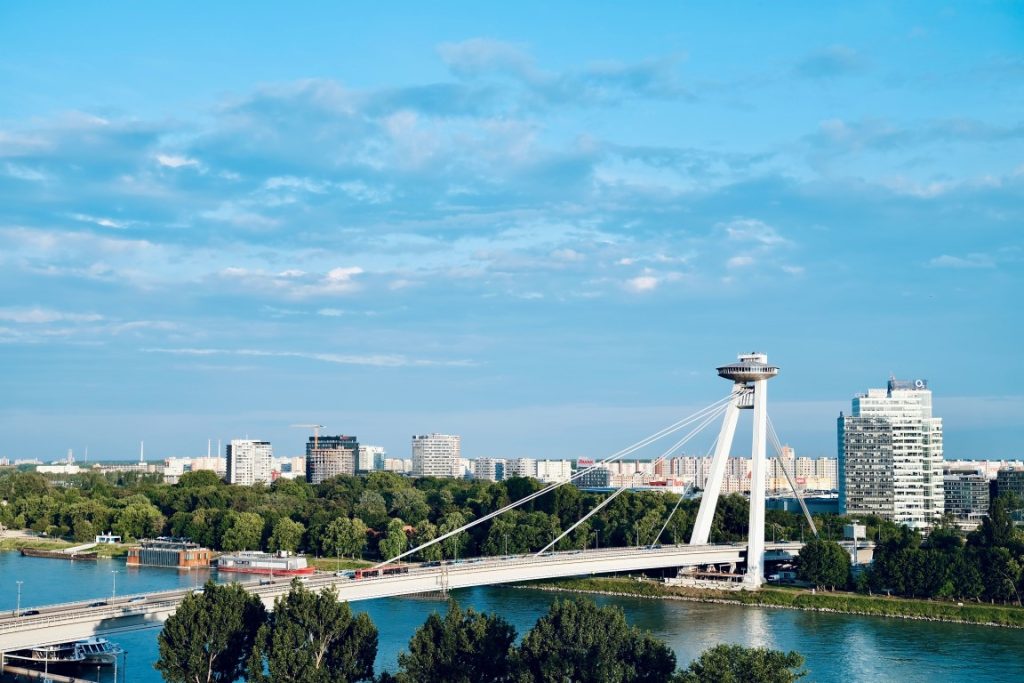
One of the most memorable meals we’ve ever had in Bratislava was at the UFO Restaurant, suspended high above the Danube on top of the iconic SNP Bridge.
We celebrated my husband’s birthday here with a leisurely lunch, and the panoramic views were just as impressive as the food. Afterwards, we headed up to the observation deck to enjoy an even higher perspective over Bratislava.
It’s certainly a special occasion restaurant rather than an everyday lunch spot, but if you’re celebrating something or simply want an unforgettable dining experience, it’s absolutely worth it.
Cocktails with a View (and a Little Cuban Twist)
After a full day of sightseeing, I always enjoy slowing down with a good cocktail, and Bratislava has become the setting for a few memorable evenings over the years.
Cuba Libre Rum & Cigar House
One year, we celebrated my husband’s birthday in Bratislava, and Cuba Libre was where we ended the evening.
Great cocktails, a relaxed atmosphere and, of course, one very happy Cuban enjoying a proper cigar. It turned an already wonderful birthday into one we’ll always remember.
Casa del Havana
No surprise that Havana also found its way onto our itinerary.
Travelling with my Cuban husband means that every destination somehow ends up including a little piece of Cuba. Whether it’s Cuban music, a mojito or simply the familiar atmosphere, we always seem to find ourselves drawn to places like this.
It’s become one of our little travel traditions, just like stopping for ice cream wherever we go.
A Little Personal Note
One thing I’ve always enjoyed about visiting Bratislava is hearing Hungarian spoken around the city. Thanks to the shared history and the large Hungarian community in Slovakia, it happens surprisingly often.
I usually start every conversation in English, but I have a little game with myself. I keep chatting until someone suddenly switches to Hungarian. It happens more often than you might think, and every single time it makes me smile.
For me, that’s part of Bratislava’s charm. It feels familiar and foreign at the same time, a city where different cultures and histories have blended together for centuries.
Where to Stay in Bratislava
During our latest trip, we stayed at Metropolitan Star Apart Hotel for three nights, and I’d happily book it again.
The location was one of the biggest reasons we chose it. Situated just a short walk from the Presidential Palace, it made exploring Bratislava incredibly easy. Most of the city’s main attractions were within walking distance, so we rarely needed public transport once we had arrived.
The apartment itself was modern, spacious and perfect for a couple looking for a comfortable city break. I also appreciated the 24-hour reception, secure key-card access throughout the building and the private balcony, which was a lovely bonus after a full day of sightseeing.
If you’re arriving by train, getting there is straightforward. From Bratislava’s main railway station, it’s only a couple of stops by bus before a short walk to the hotel.
For us, it offered exactly what we were looking for: a central location, comfortable accommodation and an excellent base for discovering the city at a relaxed pace.
Bratislava at a Glance
???? Best for: Couples, history lovers, foodies and easy European city breaks
???? Perfect day trip from: Budapest or Vienna
???? Getting around: Most attractions are within walking distance
⏰ Recommended stay: One full day is enough to see the highlights, but two or three days will let you enjoy the city at a much slower pace.
???? Budget: Generally more affordable than Vienna, with plenty of great restaurants and cafés for every budget.
❤️ Don’t miss: The Blue Church, Bratislava Castle, St. Martin’s Cathedral, a walk along the Danube and a cocktail with a view at the UFO.
If you’ve already explored Budapest and are looking for your next adventure, Bratislava is one of the easiest and most rewarding city breaks you can add to your itinerary.
Final Thoughts
Bratislava may not have the world-famous landmarks of Prague or Vienna, but that’s exactly what makes it so special.
It’s a city best explored at a slower pace. Wander through its charming streets, stop for coffee, enjoy a long lunch, watch the boats drift along the Danube and simply take your time.
I’ve visited Bratislava several times over the years, and every trip has given me another reason to come back. Whether you’re planning a day trip from Budapest, a weekend escape or combining it with Vienna, I hope this guide helps you discover why this small capital has earned a special place in my heart.
Looking for more easy day trips from Budapest? You may also enjoy visiting Szentendre, one of my favorite small towns just outside the Hungarian capital.
FAQ About Visiting Bratislava
Is Bratislava worth visiting?
Absolutely. Bratislava may be one of Europe’s smallest capitals, but that’s exactly what makes it so enjoyable. Its charming Old Town, fascinating history, beautiful riverside setting and excellent restaurants make it a perfect city break or day trip from Budapest or Vienna.
Is one day enough for Bratislava?
Yes, you can see most of the main attractions in one full day. However, if you enjoy slow travel like I do, spending two or three days allows you to explore at a more relaxed pace, discover hidden cafés and enjoy long lunches without rushing from one sight to another.
How do I get from Budapest to Bratislava?
The easiest option is by train. Direct trains leave regularly from Budapest Nyugati Railway Station, and the journey takes around 2.5 hours. Driving is another convenient option and takes about two hours, depending on traffic.
Can you walk everywhere in Bratislava?
Definitely. One of Bratislava’s biggest advantages is its compact size. Most major attractions, restaurants and cafés are within walking distance, making it an ideal city for exploring on foot.
What is Bratislava famous for?
Bratislava is best known for its picturesque Old Town, Bratislava Castle, the Blue Church, St. Martin’s Cathedral, the UFO Tower, and its role as the former coronation city of the Kingdom of Hungary.
Is Bratislava expensive?
Compared to many other European capitals, Bratislava is generally considered affordable. You’ll find everything from budget-friendly local pubs to fine dining restaurants, making it easy to plan a trip that suits your budget.
Can you combine Bratislava with Vienna or Budapest?
Absolutely. Bratislava is perfectly located between Vienna and Budapest, making it one of the easiest European capitals to combine with either city. Thanks to frequent train connections and short travel times, many visitors include Bratislava as part of a multi-city itinerary.
Happy travels!
If you enjoyed this blog post, follow me on Facebook, Instagram, and other social media for more updates and behind-the-scenes content. For even more inspiration, check out my constantly updated Pinterest boards, where I share ideas, recipes, travel tips, and more!