


Budapest Travel Guide for First-Timers
Budapest – the city that steals hearts
For most first-time visitors to Hungary, Budapest is where the adventure begins. And honestly, it’s easy to see why.
Budapest is one of Europe’s most beautiful capitals, where grand historical architecture, thermal baths, ruin bars and café culture all somehow exist side by side. One moment you are walking past elegant palaces and UNESCO World Heritage landmarks, the next you are drinking wine in a hidden courtyard or eating lángos at a busy market hall.
The city was officially born in 1873 when Buda, Pest and Óbuda united into one. Even today, the two sides of the Danube feel completely different: hilly and historic Buda on one side, lively and energetic Pest on the other.
Affectionately known as the “Queen of the Danube,” Budapest has long fascinated visitors with its dramatic riverside panorama, grand architecture and unique atmosphere.
Over the centuries, Romans, Ottomans, Austrians and many others all left their mark on the city. That layered history is exactly what gives Budapest its unique character today. The architectural beauty of Budapest has even earned it the nickname “Paris of the East,” although honestly, Budapest has a personality entirely its own.


Useful Information
Public transport
Budapest has an excellent and easy-to-use public transportation system including metros, trams, buses and trolleybuses, making it very simple to get around the city even without a car.
The easiest way to plan your journey and buy tickets is through the official BudapestGO app operated by BKK – Centre for Budapest Transport. The app allows you to purchase digital tickets and passes, plan routes in real time and check current traffic information.
And yes, ticket inspections are very common in Budapest. Always make sure your ticket is validated properly before boarding, otherwise on-the-spot fines can be issued. The good news is that Budapest public transport is generally safe, affordable and surprisingly efficient even by European standards.
Taxi
Official taxis in Budapest are easy to recognize: they are all yellow, equipped with air conditioning and usually accept both cash and card payments. Since taxi fares are regulated by the city, prices are officially the same for all licensed taxi companies. As of 2026, the standard tariff is around 1,100 HUF base fare, 440 HUF per kilometer and 110 HUF per minute waiting time.
The easiest and safest way to order a taxi in Budapest is through apps like Bolt or Uber Hungary, both widely used by locals. Traditional companies such as Főtaxi and City Taxi are also reliable options. Personally, City Taxi has always been one of my favorites.
Airport Transfer
Budapest Ferenc Liszt International Airport currently operates mainly through Terminal 2, divided into Terminal 2A and 2B, so always double-check your departure information before heading to the airport.
One of the easiest and most budget-friendly ways to reach the city center is the direct airport bus 100E, which runs between the airport and Deák Ferenc Square in downtown Budapest. The journey takes around 40-50 minutes depending on traffic, and a special airport shuttle ticket is required. Tickets can be purchased easily through the official BudapestGO app.
If you prefer a more comfortable door-to-door option, taxis and airport shuttle services are also available directly outside the terminal. Personally, after a long flight, I usually just order a Bolt taxi because it’s fast, simple and avoids unnecessary stress with luggage.
Local Tip: Skip the Airport Prices
Here’s one of my favorite Budapest travel hacks that many first-time visitors don’t know about.
Most airport food and drinks come with airport prices, but Budapest Airport has a hidden gem: a SPAR supermarket located on the arrivals level of Terminal 2B.
Whether you’ve just landed and want to grab breakfast before heading into the city, or you’re flying home and would rather buy snacks, sandwiches or drinks without paying inflated airport prices, this little supermarket can save you quite a bit of money.
I usually recommend picking up a bottle of water, some fruit or snacks for the day, especially if you’re planning to start sightseeing straight from the airport. It’s a simple tip, but one that can make your first day in Budapest a little easier (and cheaper!).
Parking in the streets
Parking in central Budapest can be a bit tricky, especially in the busy downtown districts. Most areas operate with paid parking zones, and prices vary depending on location, with the city center being the most expensive.
In general, street parking is paid from Monday to Friday during daytime hours, but some central zones also require payment on weekends and into the evening, so always check the signs carefully before leaving your car. Parking inspectors are very active in Budapest and fines are common if you forget to pay or accidentally park in the wrong zone.
The easiest way to pay is through mobile parking apps, parking meters or SMS parking where available. If you stay in the city center, honestly, public transport is often far less stressful than driving and searching for parking for half an hour.
Currency
Hungary’s official currency is the Hungarian Forint (HUF). While some restaurants, souvenir shops and tourist-oriented places may accept Euros, the exchange rates are usually terrible, so if you are given the option, always choose to pay in Forints.
Budapest is very card-friendly nowadays and most restaurants, cafés, bars, hotels and even market stalls accept credit and debit cards, including contactless payment and Apple Pay or Google Pay. Still, carrying a little cash can be useful for smaller shops, public toilets, local markets or the occasional old-school bakery that still seems to live happily in 2004.
Tipping
Tipping is still common in Hungary, especially in restaurants, cafés and bars. In sit-down restaurants, leaving around 10% is considered standard if you were happy with the service.
However, many places in Budapest now automatically add a service charge to the bill, usually between 10–15%, listed as “szervízdíj” or service fee. If that is already included, there is absolutely no obligation to leave extra tip, although some people still round up the final amount for exceptional service.
One small local habit worth knowing: when paying by cash, Hungarians usually tell the server the final amount they want to pay instead of leaving money on the table. So instead of handing over 9,500 HUF for a 8,700 HUF bill and silently hoping for the best, people simply say “kilencezer-ötszáz lesz” (“make it 9,500”). It feels surprisingly satisfying once you get used to it.
Opening Hours
Shops and supermarkets in Budapest are usually open between 7 or 8 a.m. and 8 or 9 p.m., while larger shopping malls often stay open even longer. Restaurants, cafés and bars in the city center typically remain open late into the evening, especially on weekends.
Unlike a few years ago, many supermarkets and smaller shops are now also open on Sundays, although with shorter opening hours. Still, holidays in Hungary can be a little unpredictable, so if you desperately need groceries on Christmas Eve at 9 p.m., good luck and may the odds be ever in your favor.
Tap water
Good news: tap water in Budapest is perfectly safe to drink and generally very good quality. In fact, many locals proudly insist that Budapest has some of the best tap water in Europe thanks to the city’s natural spring water sources along the Danube.
So unless you simply prefer sparkling water, there is really no need to buy bottled water all the time. Your wallet – and the planet – will probably appreciate it too.
Public Toilets
Public toilets are available in most shopping malls, larger metro stations, tourist attractions and busy downtown areas, although many require a small fee. Some accept card payment nowadays, but carrying a little cash or coins is still not a bad idea.
Honestly, the easiest solution is often using the restroom in a café, restaurant or shopping mall while pretending you were definitely planning to buy something anyway. A classic European survival strategy.
Electric voltage
Hungary uses 230 volts / 50 Hz electricity and the standard European two-pin plugs (Type C and Type F). If you are visiting from the UK, USA or other countries using different plug types, you will need a travel adapter.
Most modern chargers for phones, laptops and cameras work automatically worldwide, but it is always worth double-checking before plugging in your expensive electronics and accidentally creating your own fireworks show in Budapest.
Safety
Budapest is generally considered a very safe city by European standards, including at night. Violent crime against tourists is rare, and most visitors experience nothing more dangerous than accidentally ordering one pálinka too many.
Like in any major city, it is still worth keeping an eye on your belongings in crowded tourist areas, public transport and busy nightlife districts, especially around ruin bars and popular party streets in the city center.
Common sense goes a long way here, and overall Budapest is a very easy city to explore comfortably, even for first-time visitors.
Emergency Number
In Hungary, all emergency services can be reached by dialing 112, including police, ambulance and fire department services. The operators usually speak English, especially in Budapest, so don’t panic if you ever need help.
Hopefully you will only need this information for peace of mind and not for testing how slippery Budapest tram tracks become after rain.
When to visit Budapest
The good news? Budapest works in every season.
Spring and autumn are perfect for sightseeing and café hopping, summer brings festivals, rooftop bars and lively nights by the Danube, while winter turns the city into a magical mix of Christmas markets, thermal baths and twinkling lights along Andrássy Avenue.
No matter when you visit, Budapest always finds a way to make people fall a little bit in love with it.
Budapest Must-Sees

Vajdahunyad Castle
One of the most magical corners of Budapest, Vajdahunyad Castle looks like something straight out of a fairy tale. Hidden inside City Park, this unique castle complex was originally built for the 1896 Millennium Exhibition celebrating 1,000 years of Hungarian history. What started as a temporary attraction became one of Budapest’s most beloved landmarks, combining elements of several famous Hungarian castles and architectural styles into one wonderfully photogenic place.
Read more
Heroes’ Square
One of Budapest’s most iconic landmarks, Heroes’ Square marks the grand end of Andrássy Avenue, the city’s elegant UNESCO World Heritage boulevard. Surrounded by impressive statues and monumental architecture, the square serves as the gateway to the beautiful City Park, home to some of Budapest’s most popular attractions including Vajdahunyad Castle, Széchenyi Thermal Bath, the City Park Ice Rink and Budapest Zoo and Botanical Garden.
Read more
St. Stephen’s Basilica
With its iconic 96-meter dome, St. Stephen’s Basilica is one of Budapest’s most recognizable landmarks and the largest church in the Hungarian capital. Construction took more than 50 years and involved three different Hungarian architects, resulting in a fascinating blend of classical, Neo-Renaissance and Neo-Baroque styles. Besides its breathtaking interior, the basilica also offers one of the best panoramic views in Budapest from the top of the dome.
Read more
Dohány Street Synagogue
Located in the heart of Budapest’s historic Jewish Quarter, the Great Synagogue is one of the city’s most remarkable landmarks and the largest synagogue in Europe. The surrounding neighborhood perfectly captures the spirit of modern Budapest, where trendy ruin bars, stylish restaurants, street art and faded old apartment buildings all somehow exist side by side. Before World War II, Budapest was home to one of Europe’s largest Jewish communities, and the synagogue still stands today as an important cultural, historical and religious symbol of the city.
Read more
Széchenyi Thermal Bath
Budapest would not be Budapest without its famous thermal baths, and Széchenyi Bath is easily the city’s most iconic spa complex. Located in the heart of City Park, this magnificent Neo-Baroque bathhouse has been welcoming visitors since 1913 with its steaming outdoor pools, thermal waters and grand yellow façades. Whether you visit on a freezing winter morning or during a hot summer afternoon, soaking in the warm mineral water is one of those classic Budapest experiences you simply should not miss.
Read more
Széchenyi Chain Bridge
The iconic Chain Bridge was the very first permanent bridge connecting Buda and Pest, forever changing the history of Budapest. Opened in 1849, the elegant suspension bridge was commissioned by Count István Széchenyi, one of Hungary’s greatest reformers, whose dream was not only to unite the two sides of the city, but symbolically the entire nation as well. Today, the Chain Bridge remains one of Budapest’s most photographed landmarks, especially after sunset when the city lights reflect beautifully on the Danube.
Read more
Matthias Church & Fisherman's Bastion
Together, Matthias Church and Fisherman’s Bastion create one of the most iconic panoramas in Budapest. Located in the heart of the Buda Castle District, the colorful Zsolnay-tiled roof of Matthias Church and the fairytale towers of Fisherman’s Bastion look like something straight out of a storybook. While the church witnessed royal coronations, Ottoman occupation and centuries of Hungarian history, the Bastion was built for the Millennium celebrations of 1896, with its seven towers symbolizing the seven Hungarian tribes that settled in the Carpathian Basin in 896. And yes, the panoramic view over the Danube and Parliament from here really is as beautiful as everyone says.
Read more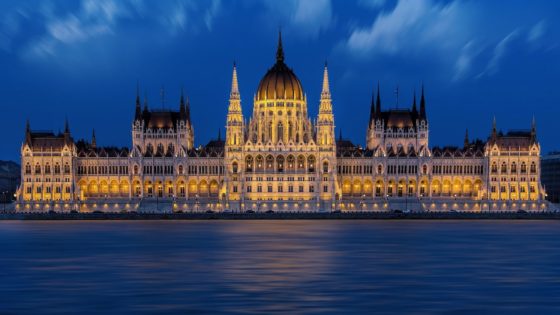
Hungarian Parliament Building
Stretching elegantly along the Danube riverbank, the Hungarian Parliament is one of the most iconic landmarks not only in Budapest, but in all of Europe. Completed in 1904 in spectacular Neo-Gothic style, the building impresses visitors with its enormous dome, richly decorated interiors and almost fairytale-like details. Inspired partly by the Palace of Westminster in London, the Parliament became a symbol of Hungarian national identity and remains one of the most photographed buildings in the city, especially when illuminated at night.
Read more
Buda Castle
Perched high above the Danube on Castle Hill, Buda Castle has been the historic seat and royal palace of Hungarian kings for centuries. Originally built in the 13th century, the palace complex was repeatedly expanded, rebuilt and transformed over time, blending Romanesque, Gothic and later Neo-Baroque elements into the impressive landmark visitors see today. Beyond its fascinating history and architecture, the castle area also offers some of the most spectacular views in Budapest.
Read more