


Budapest is famous for its grand architecture, thermal baths and rich history, but let’s be honest: one of the best things about Hungary is dessert. This is a country where people happily eat cake after a giant bowl of goulash soup and still somehow have room for one more pastry “just to taste it.” Respect.
Hungarian desserts are wonderfully indulgent, often layered with chocolate, walnuts, poppy seeds, cream or jam, and many of them come with fascinating stories from the golden age of Budapest cafés and confectioneries.
From elegant coffeehouse cakes to nostalgic homemade treats, Hungarian desserts are so much more than most visitors expect. Rich chocolate tortes, creamy pastries, fluffy dumplings and iconic café creations have been part of Hungarian culinary culture for generations. So loosen your belt a little and prepare for a seriously delicious journey through some of the best Hungarian desserts you absolutely must try when visiting Hungary.
Dobos Cake (Dobos Torta)
If you ask me to choose my number one Hungarian dessert, Dobos cake wins every single time.
This iconic Hungarian cake was created by confectioner József C. Dobos in the 1880s and first introduced to the public at the National General Exhibition of Budapest in 1885. At the time, Budapest was experiencing its golden age of cafés and elegant confectioneries, and Dobos wanted to create something completely new.
And honestly? He succeeded brilliantly.
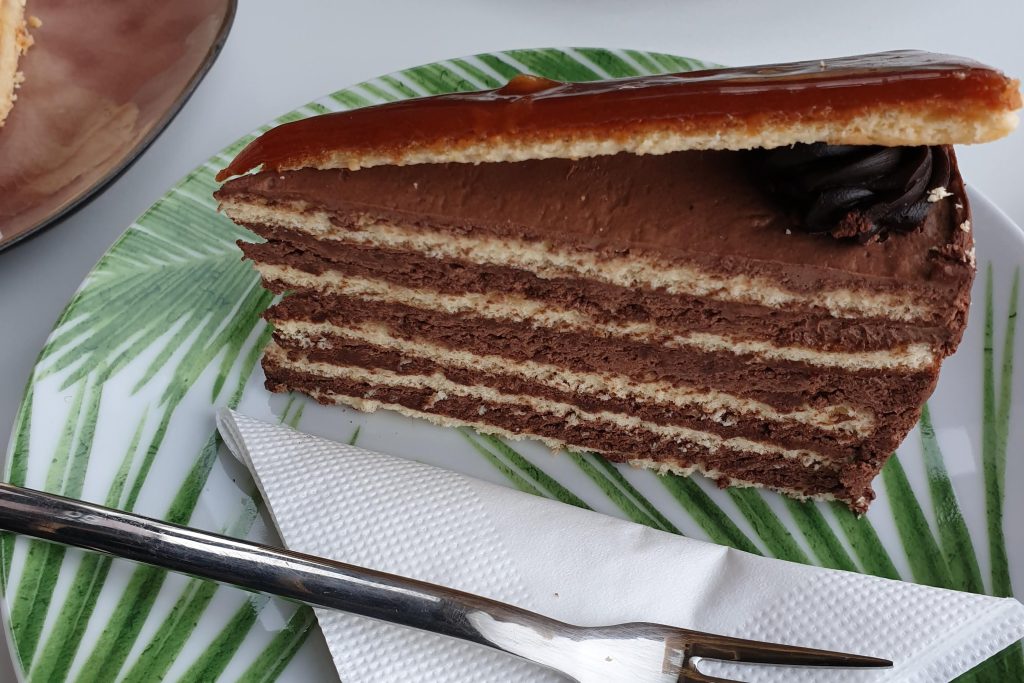
Dobos torta consists of six thin sponge cake layers filled with silky chocolate buttercream, then finished with a shiny caramel top that cracks beautifully when you cut into it. The sides are usually coated with ground walnuts or other nuts, which originally helped protect the cake from drying out in the days before refrigeration existed.
Back then this was considered revolutionary.
According to culinary legend, the famous buttercream itself was born almost by accident after one of Dobos’ assistants mistakenly added sugar to butter instead of salt. Luckily for all of us, Dobos tasted the result, loved it, and transformed the happy mistake into one of Hungary’s most legendary cakes.
What makes a really good Dobos cake special is the texture. The chocolate filling is light, airy and smooth rather than overly heavy. Traditionally, eggs beaten over steam are folded into the buttercream, giving it that luxurious softness that pairs perfectly with the crunchy caramel layer on top.
In the late 19th century, the cake became so popular that it was shipped across the Austro-Hungarian Empire in special wooden boxes. Not bad for a dessert invented before refrigerators even existed.
Today you’ll find Dobos cake in almost every traditional café and confectionery in Budapest. And trust me, sitting down in a beautiful old coffeehouse with a slice of Dobos cake and a coffee feels like a very important Budapest experience. Even if your diet plans strongly disagree.
Esterházy Cake
Esterházy cake is what happens when Hungarian pastry chefs decide that one layer of cake is simply not ambitious enough.
Together with Dobos torta and Rigó Jancsi, Esterházy cake belongs to the holy trinity of classic Hungarian cakes. Elegant, layered and instantly recognizable with its famous spiderweb decoration, this cake has been a centerpiece of Hungarian confectionery since the 19th century.
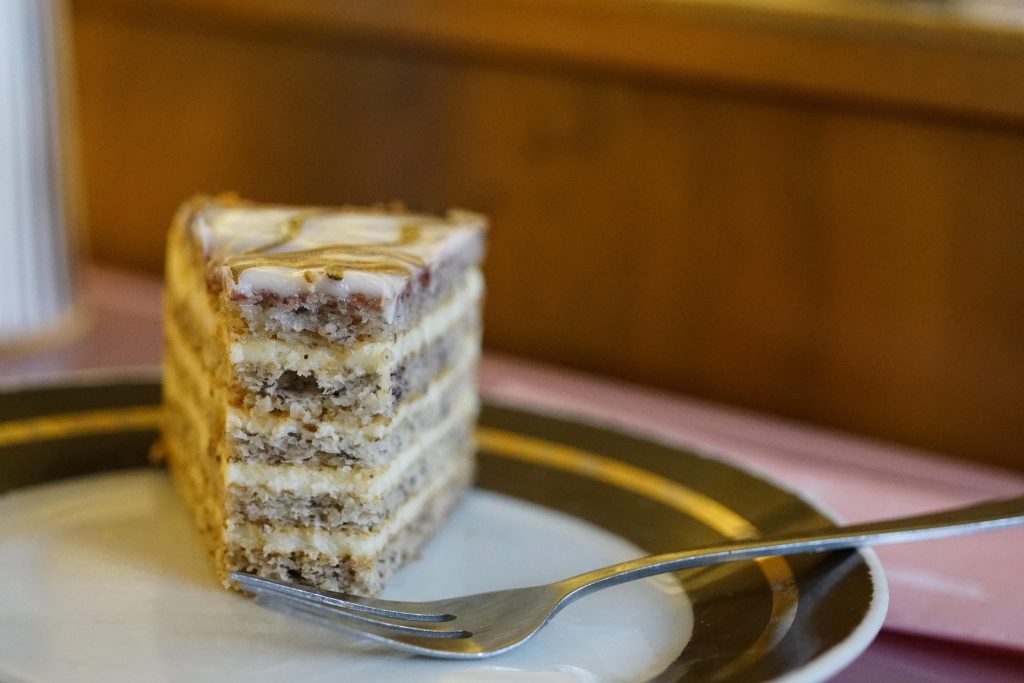
Traditional Esterházy torta is made with several delicate layers of walnut or almond meringue, filled with silky vanilla buttercream lightly flavored with brandy or cognac. The top is covered with a glossy white fondant or white chocolate glaze, decorated with its instantly recognizable spiderweb or marble pattern made from melted chocolate.
If you spot this cake in a Budapest café window, you’ll know it immediately. Esterházy cake has serious main character energy.
Originally the recipe used almonds, but over time many Hungarian pastry shops switched to walnuts, partly because Hungarians are deeply emotionally attached to walnuts in desserts and partly because, well… walnuts simply work beautifully here. Nowadays most versions you’ll find in Budapest use walnut sponge layers, while almond flakes remain as decoration around the sides.
The cake was created in the 19th century and named after Prince Pál Antal Esterházy, a famous Hungarian aristocrat and diplomat from the powerful Esterházy family. Apparently he was a great lover of fine food and elegant living, which honestly feels very on-brand for a man who ended up having a cake named after him.
The dessert quickly became wildly popular throughout the Austro-Hungarian Monarchy and eventually turned into one of the ultimate celebration cakes in Hungary. Birthdays, weddings, Sunday family lunches… Esterházy torta has been appearing at special occasions for generations.
And while it certainly looks refined and aristocratic, the flavor itself feels surprisingly comforting. Nutty, creamy, slightly buttery and not overwhelmingly sweet, it pairs dangerously well with coffee. One slice usually disappears much faster than expected. Consider yourself warned.
Rigó Jancsi
If chocolate desserts had a scandalous celebrity era, Rigó Jancsi would absolutely be the dramatic heartbreaker of the group.
Together with Dobos torta and Esterházy cake, Rigó Jancsi belongs to the holy trinity of classic Hungarian cakes. Rich, elegant and unapologetically chocolatey, this iconic Hungarian dessert has been winning hearts since the late 19th century.
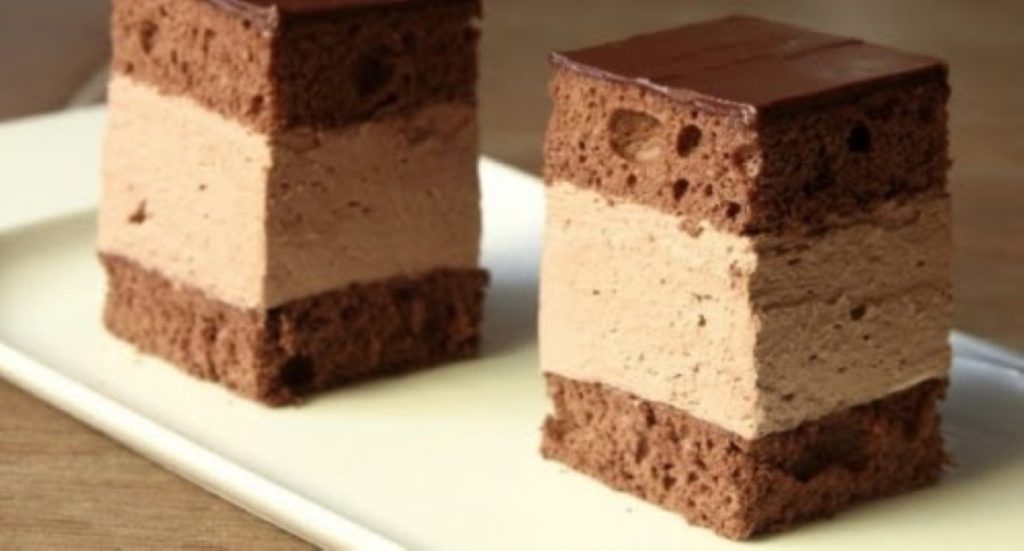
Rigó Jancsi is traditionally made with two soft layers of chocolate sponge cake filled with an airy chocolate mousse or whipped chocolate cream, then finished with a glossy dark chocolate glaze on top. Some versions include a thin layer of apricot jam or a splash of rum for extra depth, because apparently Hungarians looked at chocolate cake and decided it should become even more indulgent.
And honestly? They were absolutely right.
The cake was named after the famous Romani violinist János Rigó, better known as Rigó Jancsi, whose love life caused one of the biggest celebrity scandals of the 1890s.
Born in Hungary in 1858, Rigó became an internationally celebrated violinist and performed across Europe. In 1896, while playing in Paris at Restaurant Payard, he met Clara Ward, a wealthy American-born Belgian princess. The two fell hopelessly in love despite both being married at the time, which naturally turned their romance into headline material across Europe.
Eventually they divorced their spouses and married each other, shocking high society in the process. Honestly, this story already sounds like a Netflix period drama waiting to happen.
According to the legend, Rigó once surprised Clara with a rich creamy chocolate cake during one of their romantic meetings. A clever confectioner noticed the glamorous couple and named the dessert after the violinist, probably realizing that scandal plus chocolate was excellent marketing even back then.
Turns out he was right. The cake quickly became famous throughout the Austro-Hungarian Monarchy and remains one of Hungary’s most beloved chocolate desserts to this day.
And I completely understand why because this was also one of my absolute favorite childhood cakes. One bite of that soft sponge and silky chocolate filling, and suddenly every Hungarian grandmother’s Sunday lunch comes rushing back into my memory.
Somlói Galuska
If Dobos cake is the elegant queen of Hungarian desserts, then Somlói galuska is the fun, slightly messy cousin everybody secretly loves more.
This legendary Hungarian dessert was created in the famous Gundel Restaurant in the 1950s and quickly became one of Hungary’s most beloved sweets. Despite the name, it actually has nothing to do with the Somló wine region. According to culinary history, the dessert was named after the creator’s hometown, Somlyó, although somewhere along the way the spelling changed and “Somlói” stuck forever.
Now let’s clear up one important thing immediately: despite the word galuska meaning “dumplings” in Hungarian, there are no actual dumplings involved here. Confusing? Absolutely. Delicious? Even more.
Somlói galuska is basically Hungary’s wonderfully over-the-top answer to the English trifle. Layers of vanilla, chocolate and walnut sponge cake are soaked with rum, filled with silky vanilla custard, raisins and whipped cream, then generously topped with chocolate sauce and crushed walnuts or almonds.
And yes, it is every bit as indulgent as it sounds.
Traditionally, the dessert is not served in neat slices. The soft sponge layers are scooped into rustic little mounds or “dumplings,” giving Somlói galuska its signature homemade look. Of course, modern pastry chefs love reinventing it, so nowadays you might also see elegant plated versions in fine dining restaurants where the layers are arranged with almost architectural precision.
Personally? I still love the classic slightly chaotic version the most. The kind that looks like somebody gave up halfway through plating it but tastes absolutely heavenly.
The magic of Somlói comes from the textures. Soft sponge cake, creamy custard, fluffy whipped cream, crunchy nuts and rich chocolate sauce all melt together into one gloriously comforting dessert. Some versions even soak the raisins in sweet Tokaji Aszú wine, because apparently regular rum was not decadent enough already.
This is definitely one of those Hungarian desserts where calories simply stop counting. And honestly, while sitting in a historic Budapest café with a giant bowl of Somlói galuska in front of you, you probably won’t care anyway.
Zserbó
If there is one Hungarian dessert that instantly tastes like Christmas, family gatherings and grandmothers telling you to “just take one more slice,” it’s definitely zserbó.
Zserbó szelet, also known internationally as Gerbeaud cake, is one of the most iconic Hungarian layered desserts. It is made with soft yeast dough layered with apricot jam and ground walnuts, then finished with a glossy dark chocolate glaze on top.
Simple combination. Absolutely dangerous.
Traditionally, the dough was made with lard instead of butter, which gave it that slightly crumbly, melt-in-your-mouth texture Hungarians are deeply emotionally attached to.
The cake was named after Émile Gerbeaud, the famous Swiss-born confectioner who arrived in Budapest in the late 19th century to work with legendary café owner Henrik Kugler. Soon after, Gerbeaud took over the elegant café on Vörösmarty Square, which still operates today as the famous Café Gerbeaud.
And honestly, if there was ever a man destined to have a Hungarian dessert named after him, it was probably him.
By the end of the 19th century, Gerbeaud’s confectionery empire had become wildly successful. His café employed around 150 people, which was an enormous operation at the time, and zserbó quickly became one of the signature cakes of Hungarian pastry culture.
Over the decades this rich walnut-apricot cake slowly moved from elegant Budapest coffee houses into Hungarian family kitchens, where it became a holiday essential.
In many Hungarian homes, Christmas and Easter simply do not exist without a giant tray of zserbó waiting somewhere in the background.
My grandmother always baked a huge tray for both holidays, and somehow the first few slices disappeared suspiciously fast every single year. Nobody ever confessed anything, of course.
The magic of zserbó is that it feels both luxurious and comforting at the same time. The slightly tart apricot jam balances the sweetness perfectly, the walnuts add richness and texture, and the thin chocolate layer on top ties everything together beautifully.
And if you happen to love chocolate, walnuts and apricot together, congratulations: you may have just found your new favorite Hungarian dessert.
Krémes
Some desserts try very hard to impress you with complicated layers, dramatic decorations and twenty different flavors fighting for attention. Krémes does the exact opposite. And somehow, that is exactly why everybody falls in love with it.
Krémes is one of Hungary’s most beloved pastries: two delicate layers of crispy puff pastry filled with an enormous amount of silky vanilla custard cream and finished with a snowfall of powdered sugar on top.
Simple. Elegant. Absolutely addictive.
The Hungarian version is especially famous for its contrast of textures. The pastry is incredibly light and flaky, while the cream is airy, smooth and intensely vanilla flavored without being overwhelmingly sweet.
Fair warning though: eating krémes gracefully is nearly impossible.
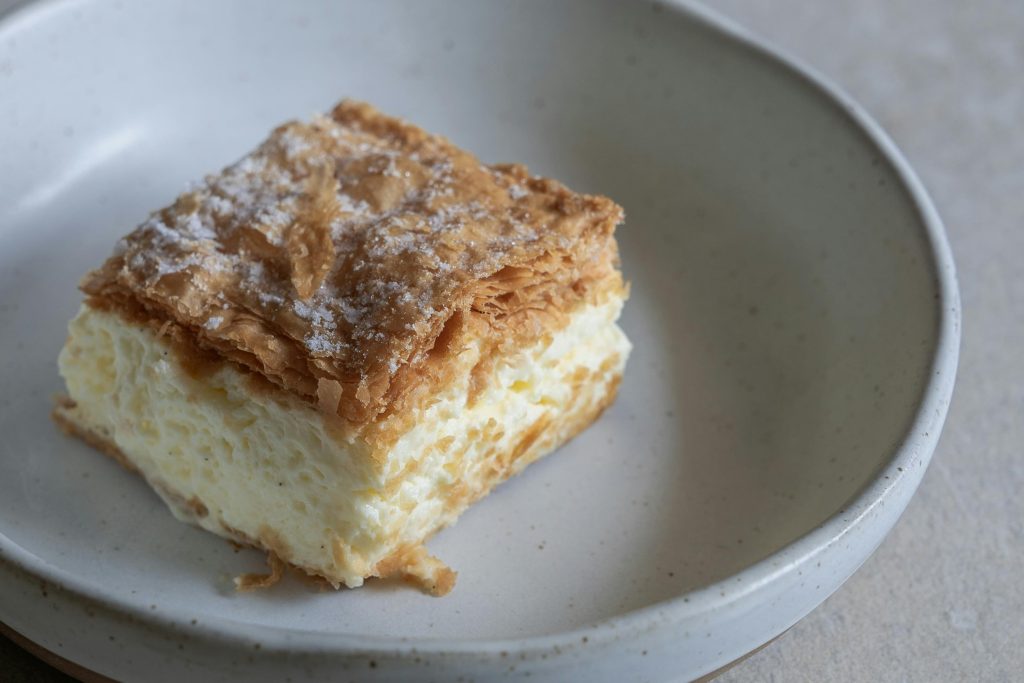
The moment your spoon touches the crunchy pastry layer, there is a high chance the entire thing will collapse sideways in front of you. But honestly, that’s part of the experience.
Krémes has been a favorite pastry in Hungary since the early 20th century, although similar custard slices already existed across Europe centuries earlier. Variations of the dessert can be found in France, Italy and throughout Central Europe under names like mille-feuille, vanilla slice or cremeschnitte.
Some food historians even trace one early version of the dessert back to the Hungarian city of Szeged.
Hungarians, naturally, took the concept and made it even creamier.
Today you can find countless variations beside the classic vanilla version: chocolate krémes, coffee krémes, jam-filled versions and the famous French-style “francia krémes,” which includes an extra layer of whipped cream.
When I was a child, there was a version called Albán krémes that became one of my absolute favorites. Instead of the usual white whipped cream topping found on francia krémes, this one had chocolate cream on top.
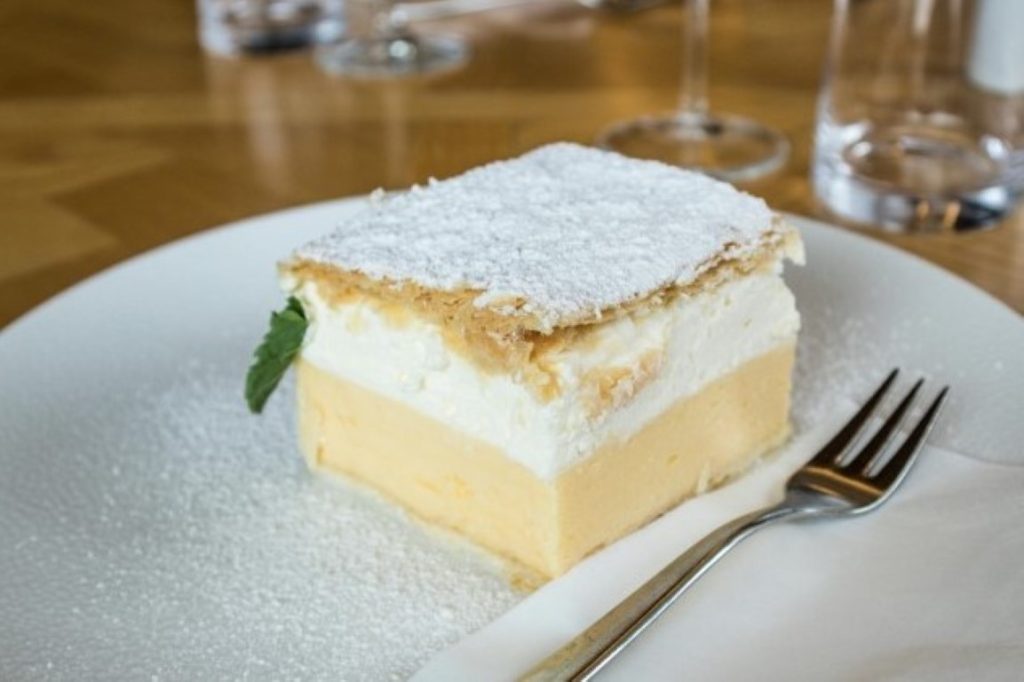
Basically, somebody looked at krémes and decided the only possible improvement was adding even more chocolate. I completely supported this decision then, and honestly, I still do.
According to TasteAtlas, Hungarian krémes is considered one of the world’s most popular custard slice desserts, and after one bite it becomes very easy to understand why.
Because sometimes the simplest cakes are the hardest to forget.
Rákóczi túrós
This one is my mum’s absolute favorite, and honestly, I completely understand why.
Rákóczi túrós is one of those classic Hungarian desserts that looks elegant and comforting at the same time. It combines a buttery shortcrust pastry base with a soft, slightly citrusy cottage cheese filling, a thin layer of apricot jam, and a beautiful golden meringue topping piped into decorative patterns.
Yes, it tastes just as good as it sounds.
Despite the royal-sounding name, the dessert was not named after the famous Hungarian prince Ferenc Rákóczi II. Instead, it was created by legendary Hungarian chef János Rákóczi, one of the country’s most celebrated culinary masters, who worked in prestigious restaurants across Europe.
He introduced the cake to the world at the 1958 Brussels World Expo, where it became an instant success and helped showcase Hungarian pastry culture internationally.
What made the dessert revolutionary at the time was the topping.
Traditional Hungarian cottage cheese pies were usually covered with another layer of pastry. János Rákóczi had a far more elegant idea: replacing the top crust with soft, lightly toasted meringue.
To be honest, that fluffy cloud-like topping completely changed the game.
The filling itself is made with túró, a fresh Hungarian curd cheese that sits somewhere between cottage cheese and ricotta. It gives the cake a light, slightly tangy flavor that pairs perfectly with the sweetness of the apricot jam and the airy meringue.
The balance is what makes Rákóczi túrós so special. It never feels too heavy, too sweet or overwhelming.
It’s delicate, nostalgic and dangerously easy to keep eating “just one more bite” of. Which probably explains why Hungarian mothers have been loving this cake for generations.
Gundel palacsinta
If regular Hungarian pancakes are comfort food, Gundel palacsinta is their glamorous older cousin who arrives overdressed and steals the entire show.
This legendary Hungarian dessert takes the humble palacsinta to a completely different level. Thin pancakes are filled with a rich walnut cream flavored with rum, raisins and a hint of citrus, then generously covered in warm dark chocolate sauce.
And honestly? It’s dangerously good.
At the famous Gundel Restaurant in City Park, they sometimes flambé it right in front of you, because apparently pouring rum over dessert and setting it on fire was the logical next step toward happiness.
The result is rich, soft, slightly boozy and wonderfully dramatic. Basically the kind of dessert that makes everybody at the table suddenly regret not ordering the same thing.
What many people don’t know is that Gundel palacsinta was not actually invented by the Gundel family.
The original recipe is believed to have come from Lola Márai, the wife of famous Hungarian writer Sándor Márai. She introduced the dessert to legendary restaurateur Károly Gundel during a banquet held after one of Márai’s theatre premieres. Gundel loved it so much that he immediately added it to the menu under the name “Márai palacsinta.”
During the communist era, however, the Márai family emigrated from Hungary and using his name became politically inconvenient. The dessert was eventually renamed Gundel palacsinta and the new name stuck forever.
Today it remains one of the most famous Hungarian desserts, combining soft pancakes, chocolate, walnuts and rum into something that feels both nostalgic and wonderfully indulgent.
Not exactly the kind of dessert you share politely.
Túrógombóc
Túrógombóc might just be the ultimate Hungarian comfort dessert.
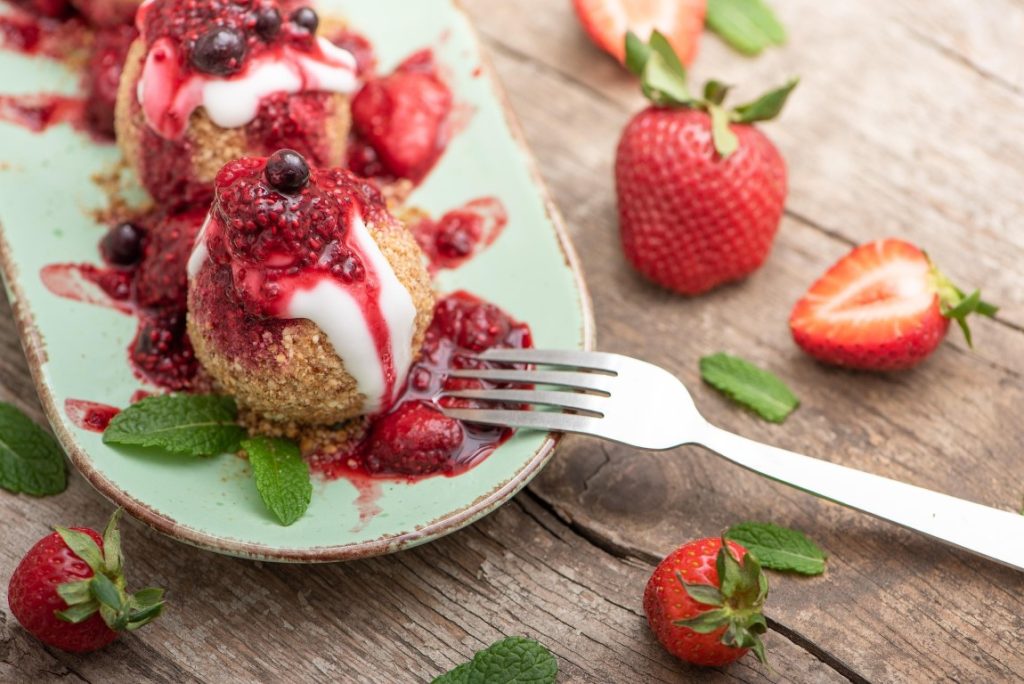
These soft little cottage cheese dumplings are made from túró, semolina and eggs, gently cooked in hot water, then rolled in toasted golden breadcrumbs while still warm and fluffy. They are usually served with powdered sugar, sour cream and sometimes fresh fruit or fruit sauce on the side.
Simple? Yes. Addictive? Also yes.
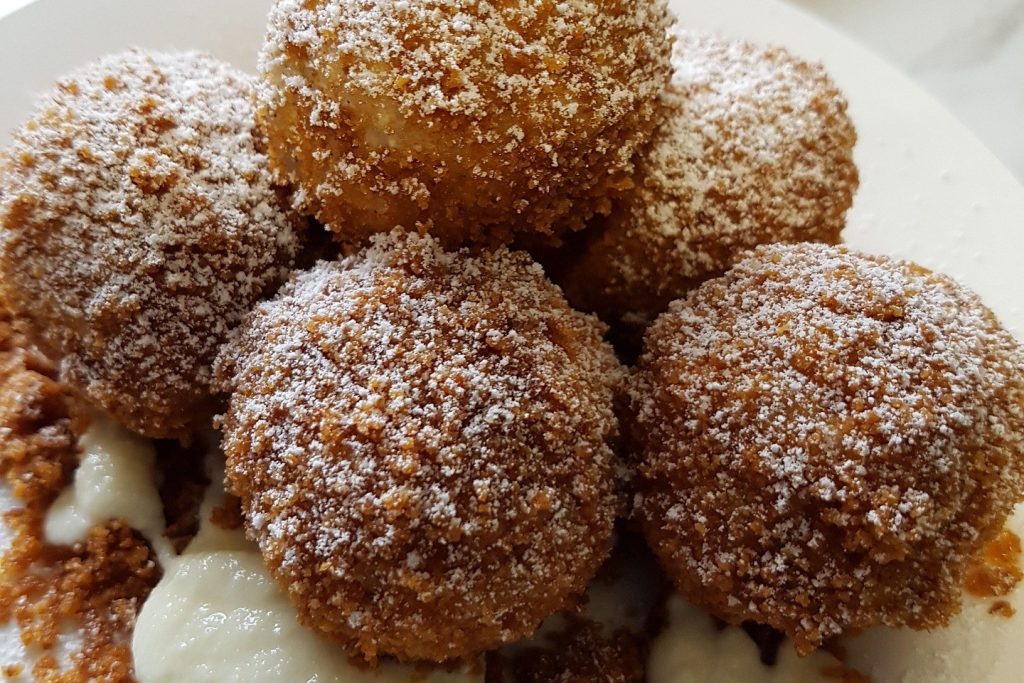
The texture is what makes them special. Light, airy and pillowy on the inside, slightly crispy from the buttery breadcrumbs on the outside. Some versions include vanilla or lemon zest in the mixture, which gives the dumplings an even fresher flavor.
And the best part? They are usually not overwhelmingly sweet.
Túrógombóc is the kind of dessert you order when you want something comforting without immediately falling into a sugar coma afterward.
It’s also my mum’s favorite Hungarian dessert, so whenever we discover a new restaurant serving túrógombóc, it automatically turns into a very serious tasting mission.
Some restaurants make them small and elegant, others serve giant dumplings the size of tennis balls. Some add fruit coulis, vanilla sauce or flavored sour cream. But honestly, the classic version with powdered sugar and cold sour cream is hard to beat.
The real star here is túró itself. While túró often gets translated as cottage cheese, quark or farmer cheese, none of those are exactly right. Hungarian túró is drier, softer and slightly tangy, and Hungarians use it in absolutely everything from pancakes and strudels to savory spreads and pasta dishes.
And then there is Túró Rudi. Now that is a completely different level of national obsession.
This chocolate-covered túró snack is so deeply embedded into Hungarian culture that Hungarians living abroad regularly beg visiting friends and relatives to smuggle some into foreign countries like emotional support packages.
Honestly, if you know, you know.
Túró has been part of Hungarian gastronomy for centuries, appearing in Hungarian cookbooks as early as the 16th century. So when you eat túrógombóc, you are not just trying dessert, you are tasting one of Hungary’s oldest culinary comfort foods.
Final thoughts
As you can probably tell by now, Hungarians take desserts very seriously.
From elegant coffeehouse cakes born during the golden age of Budapest to nostalgic homemade favorites baked by generations of Hungarian grandmothers, desserts are deeply woven into Hungarian culture. And honestly, trying them is one of the most delicious ways to understand the country a little better.
Of course, this list is far from complete. Hungary has enough cakes, pastries and sweet comfort foods to keep you happily sugar-loaded for weeks. So consider this more of a personal favorites list than a definitive ranking.
And yes, before somebody asks in the comments: I know I left out kürtőskalács, rétes and a few other legendary treats. Don’t worry, they deserve their own separate street food edition.
So while exploring Budapest, take a break from sightseeing every now and then, sit down in a beautiful old café, order a coffee and a slice of cake, and fully embrace the Hungarian dessert lifestyle.
Calories consumed on vacation simply do not count. At least this is what I keep telling myself.
If you enjoyed this blog post, follow me on Facebook, Instagram, and other social media for more updates and behind-the-scenes content. For even more inspiration, check out my constantly updated Pinterest boards, where I share ideas, recipes, travel tips, and more!