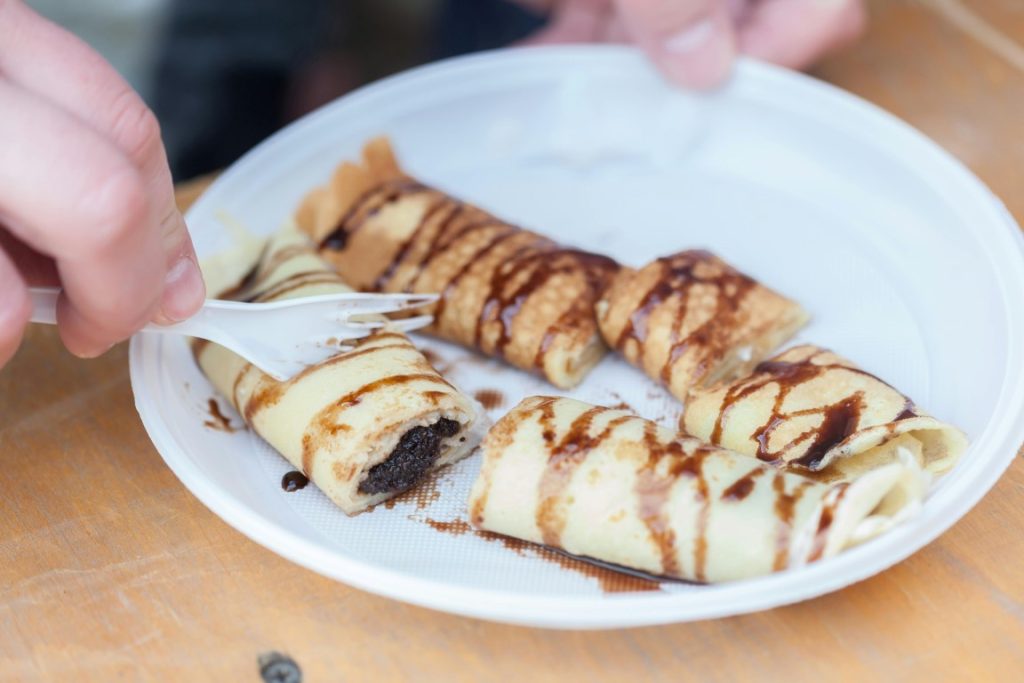
Hungarian cuisine is famous for giant comfort-food meals, slow-cooked stews and cakes capable of emotionally healing you after one bite. But let’s be honest: sometimes the best food experiences happen standing at a market, next to a tiny kiosk, while grease slowly drips through a paper napkin onto your hand.
Hungarian street food is not delicate. It is bold, messy, unapologetically filling and occasionally life-changing after a long night out in Budapest.
Some of these foods come straight from childhood memories, others from festivals, Christmas markets, beach buffets at Lake Balaton or late-night street food windows that somehow always smell irresistible around 2 am.
And while Hungary is not usually the first country people think of for street food culture, trust me: once you bite into a hot lángos or fresh chimney cake, you will understand why Hungarians are so emotionally attached to carbs.
So forget calorie counting for a moment and prepare yourself for a deliciously greasy journey through some of Hungary’s most iconic street foods.
Lángos
If Hungary had an official national street food, it would probably be lángos.
This deep-fried disc of dough is one of the greatest comfort foods ever created and also one of the most dangerous, because once you start eating it, you immediately begin planning the next one.
Traditionally, lángos was much simpler than the overloaded monster versions you often see today. When I was a child, the classic version was brushed with garlic water, sometimes with a little salt, and that was already perfect.
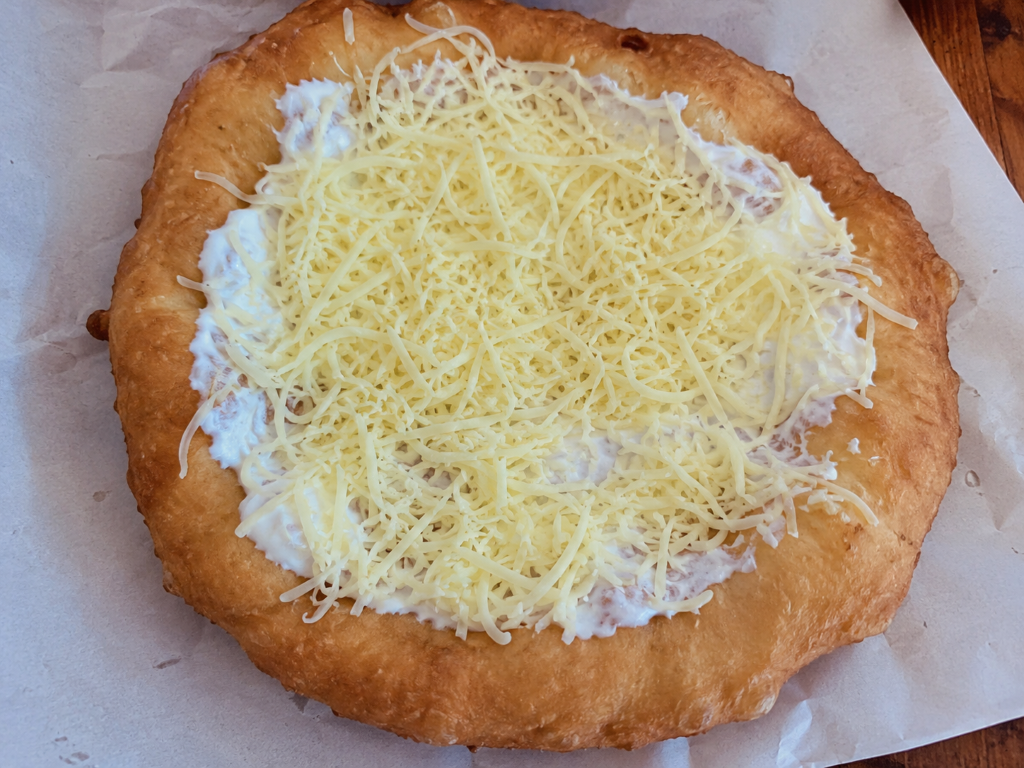
My personal favorite has always been the sajtos-tejfölös lángos: topped with sour cream and a mountain of grated cheese. Simple, greasy, glorious. Basically a Hungarian national treasure.
Today, however, lángos has evolved into complete culinary chaos and honestly, Hungarians seem very proud of this fact.
You can still find the classic toppings:
- garlic
- sour cream
- grated cheese
- or the holy trinity of all three together.
But modern lángos places now add almost anything imaginable:
- bacon
- sausage
- ham
- pulled pork
- chicken
- jalapeños
- feta cheese
- pickles
- eggs
- cabbage
- various sauces that nobody’s grandmother would recognize anymore.
The possibilities are basically endless.
And then… there are the sweet versions.
Now personally, I still cannot emotionally process Nutella on lángos. For me, this feels slightly illegal. But apparently tourists love it.
So yes, nowadays you can also find dessert lángos topped with:
- powdered sugar
- cinnamon sugar
- cocoa
- jam
- Nutella
- whipped cream
- fruits.
Some creations look less like Hungarian street food and more like something invented during a late-night festival fever dream.
Lángos is especially popular at markets, festivals, Christmas fairs and beach buffets around Lake Balaton. In fact, for many Hungarians, eating lángos near the water during summer is basically a national tradition.
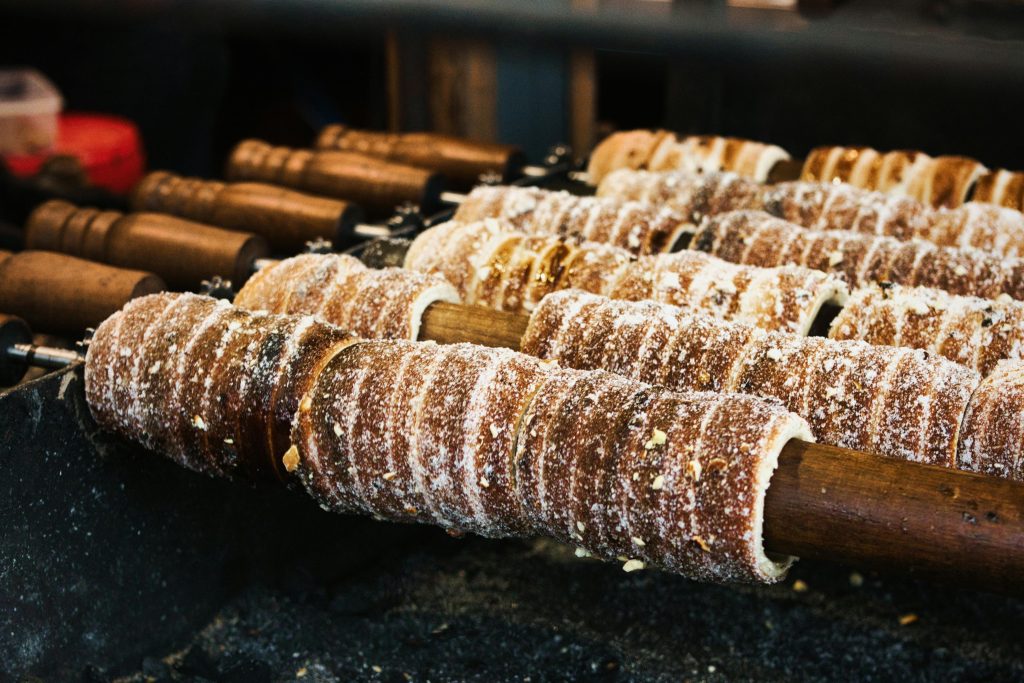
In short: this dessert has deep roots all across the region and honestly, everybody involved deserves credit for keeping it alive because it’s delicious.
Unlike elegant café desserts, kürtőskalács belongs to the streets. You buy it from little kiosks, Christmas markets, festivals and street food stands, usually while walking around with freezing hands during winter or sweating dramatically in summer heat. Somehow it works perfectly in both situations.
And let me just say this: when I was a child, kürtőskalács was a cheap little treat. Now? Sometimes the prices feel personally offensive. Still worth it though.
Modern versions have also become increasingly unhinged. Some places now fill chimney cakes with:
- ice cream
- whipped cream
- Nutella
- fruit
- chocolate bars.
At this point certain creations contain enough calories to sustain a small village through winter. Traditional Hungarian grandmothers are probably slightly horrified by these versions, but tourists absolutely love them.