


When locals want to go out and have a drink, there is one thing Budapest does particularly well: ruin bars. If you’ve never been to one, imagine an old building with a courtyard, add a few mismatched chairs, vintage furniture, colorful lights, street art and a bar or two. Now imagine that someone decided not to tidy everything up too much. That is roughly where the magic begins.
Ruin bars have become one of the things Budapest is famous for, attracting both locals and visitors from all over the world. They are particularly associated with District VII, the former Jewish Quarter, where you can find some of the city’s best-known nightlife spots.
But the ruin bar scene wasn’t created as a tourist attraction. It grew out of Budapest’s changing cityscape in the early 2000s and developed into something that was quite different from the usual pub or nightclub.
So how did a few neglected buildings become one of Budapest’s most recognizable nightlife experiences? Let’s go back to the beginning.
How Budapest’s Ruin Bars Started
The story of Budapest’s ruin bars began in the early 2000s, when the inner part of District VII was full of empty courtyards, neglected buildings and spaces that had seen better days. Instead of waiting for someone to turn them into something shiny and new, a few young entrepreneurs saw potential in what was already there.
The idea was wonderfully simple: find an abandoned building, rent it cheaply, put a bar inside and make the most of the space without trying to make it look perfect. Old furniture, second-hand objects, mismatched chairs and whatever else could be found were given a new life. The slightly chaotic result became part of the charm.
And then came Szimpla. The first Szimpla opened in 2002. In 2004, it moved to its now-famous location at 14 Kazinczy Street, where it became one of the defining places of Budapest’s emerging ruin-bar scene. What might have looked like a building waiting to be demolished turned into one of Budapest’s most famous nightlife spots.
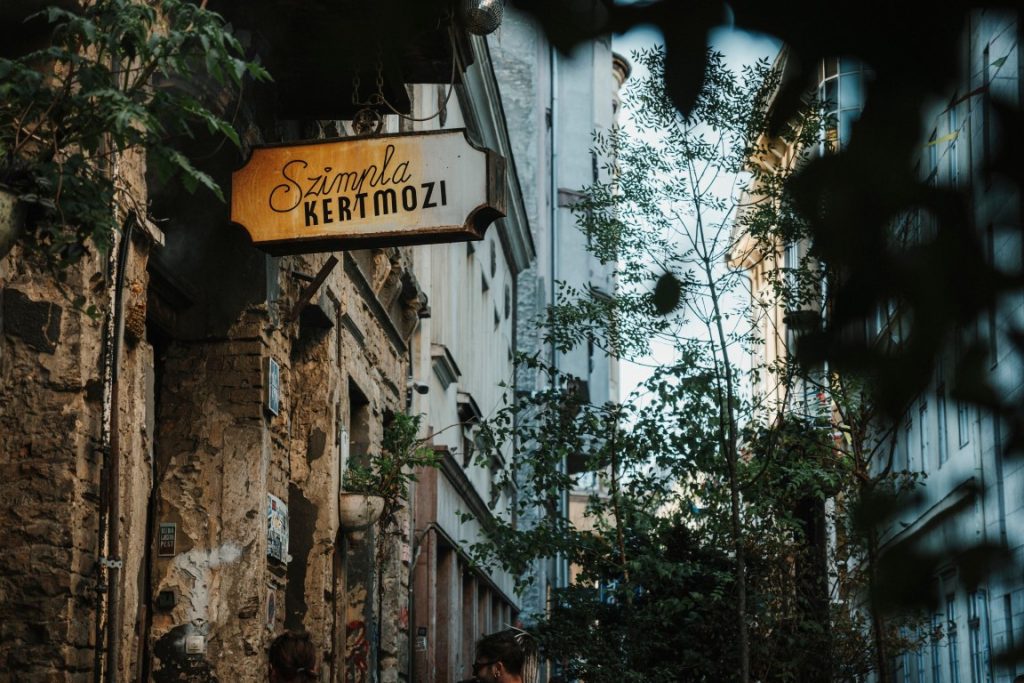
The idea caught on quickly. Other bars followed, and what had started as a creative way of using forgotten spaces gradually became a whole new type of Budapest nightlife.
At first, these places were not really trying to become tourist attractions. They were inexpensive, slightly chaotic community spaces where people could meet, listen to music, see exhibitions, have a drink and simply hang out. As their popularity grew, visitors from abroad discovered them too, and Budapest’s ruin bars eventually became famous far beyond Hungary.
Today, the ruin bar scene is very different from those early days. Some of the original venues have disappeared, while others have become major nightlife destinations. But the basic idea is still recognizable: take an unusual old space, fill it with personality and don’t worry too much about matching the curtains to the sofa. And perhaps that last part is still one of the reasons people love them.
What Makes a Ruin Bar a Ruin Bar?
There is no strict recipe for a ruin bar, and that is probably part of the fun.
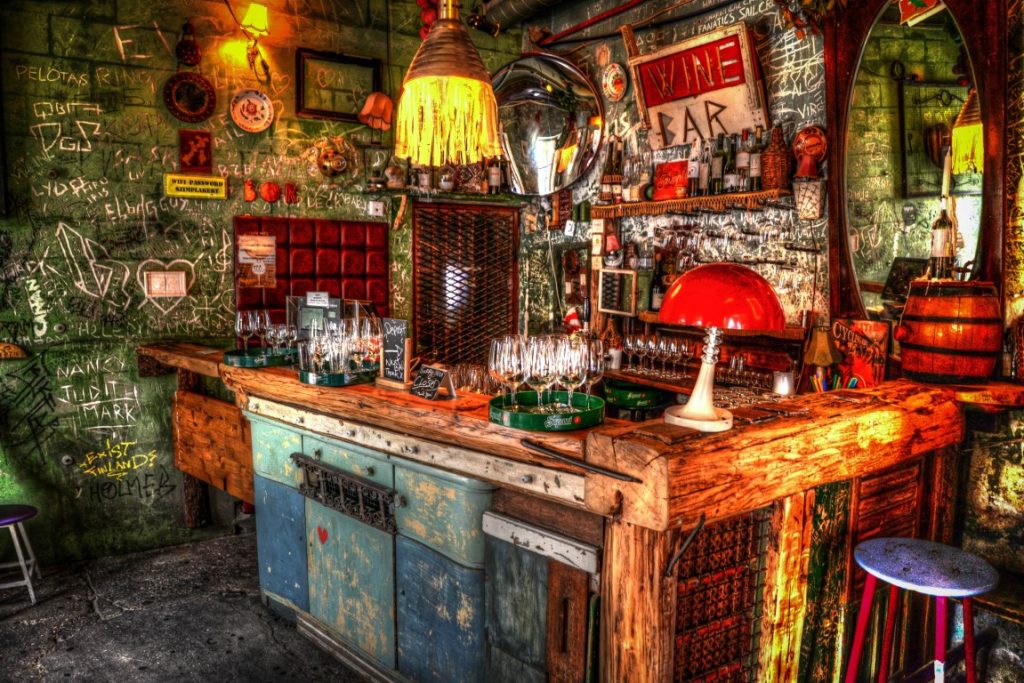
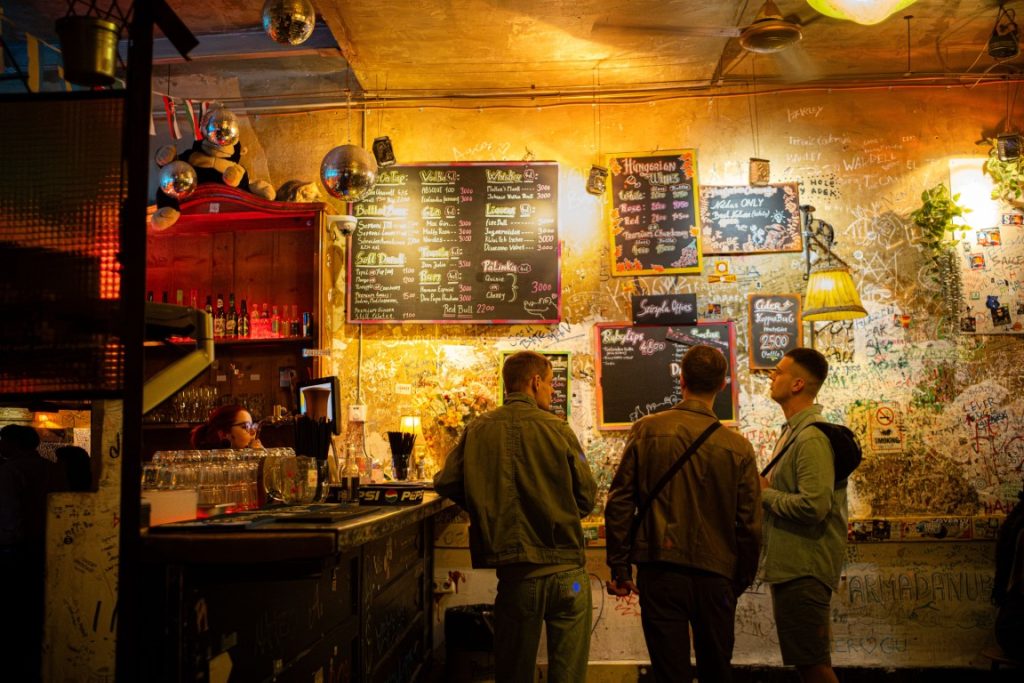
You might walk through an ordinary-looking entrance and suddenly find yourself in a large courtyard surrounded by several rooms and bars. Inside, the furniture rarely matches, the walls may be covered with graffiti or old signs, and you can expect plenty of vintage objects, strange decorations and things that seem to have found their way there by accident.
The buildings themselves are a big part of the experience. Many of these places have courtyards, unusual layouts and slightly worn interiors that give them a character you simply cannot create in a brand-new nightclub.
And ruin bars are not all about drinking and dancing. Depending on the place, you might find live music, DJs, exhibitions, markets, food, community events or simply a quiet corner where you can sit down with a beer and watch the world go by.
That is what makes the Budapest ruin-bar scene so interesting. Every place has its own personality, and you never quite know what you will find behind the next door.
From the Original Ruin Bars to Today’s Scene
The ruin-bar scene has changed quite a lot since those early days. Some of the places that were once part of Budapest’s nightlife history, including Fogasház, Ellátó Kert, Kuplung and Anker’t, have closed their doors. If you come across an old Budapest guide listing them, don’t be surprised if you can’t find them anymore.
Luckily, the ruin-bar tradition is very much alive. A few places have become Budapest institutions in their own right, while newer venues have put their own spin on the idea.
Here are some of the ruin bars and ruin-style places worth knowing about in 2026.
Szimpla Kert
Kazinczy Street 14
If you visit only one ruin bar in Budapest, make it Szimpla Kert.
This is the place that put Budapest’s ruin bars on the map. The first Szimpla opened in 2002, and the current location on Kazinczy Street opened in 2004. More than twenty years later, it is still one of the city’s best-known nightlife spots.
And it is easy to see why. Walk through the entrance and you find yourself in a maze of rooms, balconies and courtyards filled with mismatched furniture, plants, old objects, colorful lights and all sorts of wonderfully strange details. There is even a Trabant inside. You can spend quite a while simply wandering around and looking at everything.
But Szimpla is more than a bar. During the day, it also hosts community events, markets and cultural programs, while in the evening it turns into a lively meeting place for locals and visitors from all over the world.
Yes, it is touristy. There is no point pretending otherwise. But it is also one of those places that really does live up to the hype. If you want to understand what a Budapest ruin bar is all about, this is the place to start.
Instant-Fogas Complex
Akácfa Street 49-51
If Szimpla is the place to explore, Instant-Fogas is the place to party.
The two legendary Budapest nightlife spots, Instant and Fogasház, eventually joined forces to create one huge nightlife complex in the heart of District VII. Today, it has several different rooms and dance floors, each with its own music and atmosphere, so you can easily spend an entire night here without getting bored.
You might start with a drink in one of the more relaxed spaces and end up dancing until the early hours. Depending on the night, you can hear everything from electronic music and techno to rock, R&B and other party-friendly sounds.
It is much bigger and more club-like than Szimpla, so don’t come here expecting a quiet drink in a quirky old courtyard. Come when you are ready to stay up late and dance.
Good to know: Instant-Fogas is open every day from 6 pm until 6 am, and entry is generally free.
Füge Udvar
Klauzál Street 19-21
If you are looking for something more casual than the big ruin-bar clubs, Füge Udvar is a good option.
It has a relaxed, slightly scruffy atmosphere, with plenty of seating, several dance floors and lots of games. You can play pool, table football or ping-pong, grab a drink and simply hang out with friends. The place is much bigger than the name might suggest, and today it brings together the former Füge, UdvarROM and Play spaces under one roof.
And here is a little extra for my fellow Latin music lovers: Füge Udvar also hosts salsa and bachata nights, including Cuban salsa. So if you happen to be in Budapest and feel like swapping your beer for a little dancing, check the event calendar. You may just find yourself in the middle of a Latin party.
It may not have the elaborate interiors of Szimpla or the huge club atmosphere of Instant-Fogas, but that is part of its appeal. Come for a drink, play a game, and perhaps end up dancing salsa until midnight. And if you’re exploring Budapest on a budget, it is worth keeping in mind as a more casual night-out option.
Dürer Kert
Öböl Street 1
Dürer Kert is a little different from the classic District VII ruin bars, but it is worth mentioning if you want to experience another side of Budapest’s alternative nightlife.
Located by the Danube in District XI, Dürer Kert is a large outdoor venue with several spaces, concerts, DJs, games and plenty of room to hang out. During the warmer months, the garden is the main attraction, with hammocks, picnic tables and a relaxed atmosphere that makes it easy to spend an entire afternoon or evening here.
Music is a big part of the experience, with everything from alternative and electronic music to rock, hip-hop and other live performances. There are also regular community events, markets and other programs, so it is not simply a place to come for a drink.
It doesn’t have quite the same historic ruin-bar setting as Szimpla, but if you like the alternative, slightly unconventional side of Budapest nightlife, Dürer Kert is definitely worth checking out.
When Should You Visit a Budapest Ruin Bar?
This really depends on what you are looking for.
If you want to actually see the interiors and take in all the wonderfully strange details, go earlier in the evening. Szimpla Kert is much easier to explore before it gets packed, and you can take your time wandering around instead of squeezing through a crowd.
For dancing and a proper night out, come later. Places such as Instant-Fogas are designed for exactly that, with several dance floors and music continuing into the early morning.
And if you are not a huge fan of crowds, weekdays are generally a better bet than Friday or Saturday night. The atmosphere is still lively, but you have a much better chance of finding a table and actually hearing the person sitting next to you.
If you’re planning a full day of sightseeing, you can also combine a ruin bar evening with some of the city’s free attractions. Check out my guide to Free Things to Do in Budapest for more ideas.
A Few Tips for Visiting Budapest’s Ruin Bars
- Don’t expect every ruin bar to look the same. Some are small and quirky, others are huge party complexes.
- Go early if you want to explore. This is especially useful at Szimpla Kert.
- Check the program before you go. Many places host concerts, DJ nights, salsa parties and other events.
- Wear comfortable shoes. You may end up walking, dancing and exploring far more than you planned.
- Keep an open mind. Part of the fun is never quite knowing what you will find around the next corner.
- Don’t limit yourself to one place. Budapest’s ruin bars are close enough to each other that you can easily try more than one in the same evening.
Are Budapest’s Ruin Bars Still Worth Visiting?
Absolutely. Yes, the ruin-bar scene is more commercial and touristy than it was twenty years ago. Some of the original places have disappeared, and the surviving venues range from tiny bars to enormous nightlife complexes.
But the idea still works. There is something wonderfully Budapest about having a drink in an old courtyard surrounded by mismatched furniture, strange objects, music, plants and a building that clearly has a story to tell.
And you don’t have to be a serious party person to enjoy it. Go early for a drink, look around, listen to some music, or stay until late and see where the evening takes you.
If you are visiting Budapest for the first time, I would definitely put at least one ruin bar on your list. And if you only have time for one, start with Szimpla Kert. It may be famous and touristy these days, but there is a reason it became famous in the first place.
Final Thoughts
Budapest’s ruin bars are one of those things that are difficult to explain until you have actually walked into one.
They are messy, creative, sometimes strange, occasionally loud and almost never boring. Some have changed enormously over the years, while others still keep something of that original DIY spirit.
For me, that is what makes them such an interesting part of Budapest. They are not just bars. They are a little piece of the city’s history, nightlife and creative spirit all mixed together.
So next time you are in Budapest, leave some room in your sightseeing plans for a drink in a slightly strange old building. You never know where the evening might take you.
If you enjoyed this blog post, follow me on Facebook, Instagram, and other social media for more updates and behind-the-scenes content. For even more inspiration, check out my constantly updated Pinterest boards, where I share ideas, recipes, travel tips, and more!