


Are you ready for a comfortable uphill walk with one of the best views in Budapest waiting at the top? Climbing up Gellért Hill is one of those classic Budapest experiences that’s absolutely worth the effort. Not just for the panoramic views from the Citadella, but also for seeing the iconic Liberty Statue up close.
And now there’s even more reason to go. After several years of renovation, the Citadel has finally reopened to visitors in 2026 – and it feels like a completely new place.
A green escape in the middle of the city
Gellért Hill itself is dotted with trees, small parks, and quiet walking paths, making it a great spot for a relaxed afternoon walk whether you’re with friends, family, or just exploring on your own.
It’s also one of those rare places in Budapest that’s completely free to visit, which makes it even better.
The Citadel – from fortress to open space
The Citadel was originally built in 1854 by the Habsburgs after the 1848–49 Revolution, designed to keep control over the city rather than protect it. Sitting 140 meters above the Danube, it was meant as a constant reminder of power which is why locals once referred to it as the “Budapest Bastille.”
Over time, it lost its military role and went through several phases from anti-aircraft defense during World War II to a neglected structure that was even once considered for demolition. But that’s where the story changes.
The full renovation of the Citadel began in 2020, and by spring 2026, it has been transformed into a much more open, accessible, and visitor-friendly space.

Today, instead of closed walls and restricted areas, you’ll find:
- expanded green spaces (now one and a half times larger than before);
- a new 6,000 m² public park inside the fortress;
- cafés, a gift shop, and community spaces;
- newly created walkways and entrances connecting both sides of the hill.
One of the most noticeable changes is how open the Citadel feels now. Parts of the walls have been “opened up,” creating new passageways and viewpoints, making it easier to walk through and explore the area freely.
There’s also a new staircase on the eastern side, allowing direct access from the Liberty Statue area into the inner courtyard and park.
New viewpoints and exhibitions
As part of the renovation, several new panoramic terraces have been added – and honestly, the views are even better than before.
Inside the western cannon tower, a large exhibition space now hosts “The Bastion of Freedom”, a modern exhibition presenting Hungarian history and the country’s struggles for independence.
The whole redesign feels quite symbolic: opening up the fortress is a way of moving on from the past and turning it into a space that’s open and accessible to everyone.
Liberty Statue – a symbol that stayed
Standing proudly above it all is the Liberty Statue – one of the most recognizable landmarks in Budapest.
This 40-meter-high monument (14 meters of statue on a 26-meter pedestal), designed by Zsigmond Kisfaludi Strobl in 1947, can be seen from almost anywhere in the city.
Originally, it commemorated the Soviet liberation of Hungary after World War II. Over time, its meaning has evolved – especially after the political changes of 1989, when most communist-era statues were removed and relocated to Memento Park.
The Liberty Statue, however, remained – it had simply become too iconic to remove.
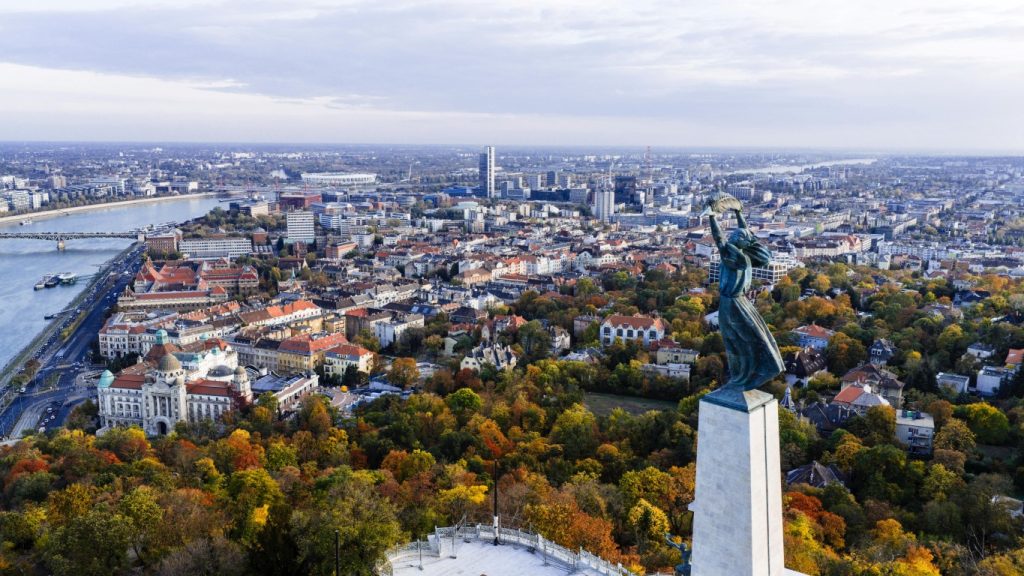
There’s also an interesting urban legend connected to it. According to the story, the statue was originally meant to hold a propeller blade, in memory of the son of Regent Horthy, who died in a plane crash. By the time the statue was completed, history had taken a different turn – Horthy was no longer in power, and instead of the propeller, a palm leaf was placed in her hands. Soviet soldiers guarding “liberty” with machine guns were also added to the base.
In reality, the idea of placing a statue on Gellért Hill came in 1945, intended to commemorate Soviet soldiers who had fallen during World War II. The statue was completed in 1947 and was originally planned for a different location, but was eventually placed here – where it would be clearly visible across the city.
As part of the recent renovation, the statue and its surroundings have also been restored, and the terrace around it has been redesigned to blend more naturally with the new park areas.
Today, it represents something much broader – freedom itself – and remains one of the most loved landmarks in the city.

Is it worth going up?
Short answer: yes.
Whether you’re visiting Budapest for the first time or you’ve been here before, Gellért Hill feels different now. The renovation didn’t just “fix” the Citadel – it completely reimagined it.
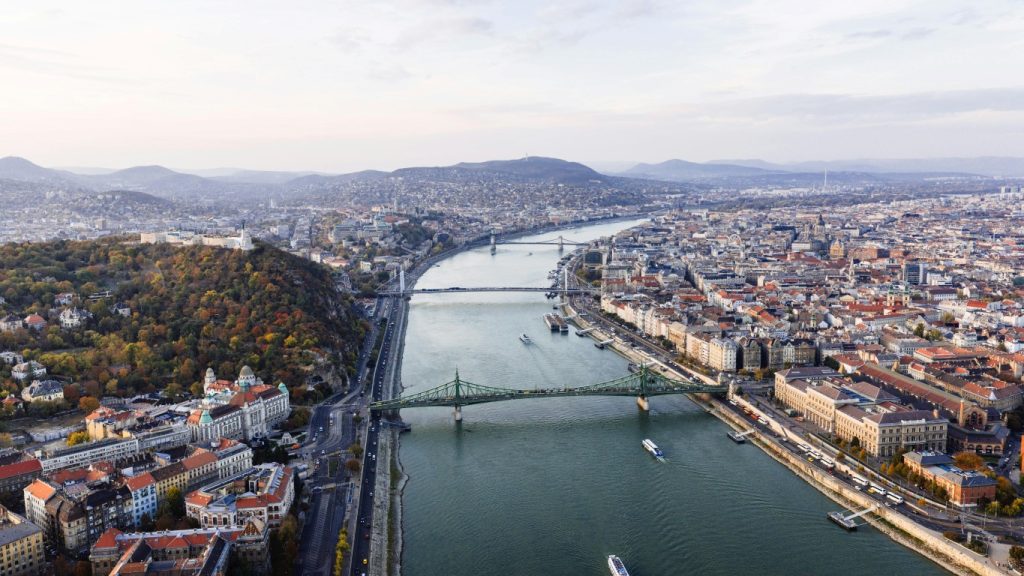
It’s more open, more walkable, and much more enjoyable to spend time in. And of course, the view is still one of the best in the city.
Getting there
You can reach the top:
- on foot from Gellért Square;
- from Hegyalja Road;
- via the Citadella promenade;
- or by bus (line 27).
The area and viewpoints have been open to visitors since April 2026, while ticketed exhibitions and additional information are available on the official website.
I wish you a lovely stay in my hometown.
If you enjoyed this blog post, follow me on Facebook, Instagram, and other social media for more updates and behind-the-scenes content. For even more inspiration, check out my constantly updated Pinterest boards, where I share ideas, recipes, travel tips, and more!
This article was updated in April 2026 with the latest tips and information.