


There are places in Budapest that seem to change with the city itself. Gozsdu Courtyard is one of them. Today, it is one of the best-known meeting places in Budapest’s Jewish Quarter, stretching between Király Street and Dob Street. The passage is filled with people, especially in the warmer months, and has become an unmistakable part of the city’s downtown atmosphere.
But this is not the Gozsdu I remember from my earliest visits. I loved the courtyards long before they were renovated and transformed into one of Budapest’s most popular entertainment areas. Back then, the buildings looked much more worn and atmospheric, the courtyards felt quieter, and there was something slightly mysterious about wandering through them.
I remember a completely different Gozsdu. And perhaps that’s why I still find this place so fascinating. It isn’t just another busy spot in downtown Budapest. It is a place where you can actually see how the city changes over time.
Behind today’s lively courtyards is a much older story, one that goes back more than a century and connects Gozsdu to Budapest’s commercial life, architecture, the Jewish Quarter and some of the city’s most difficult years.
So let’s step inside and take a look at the Gozsdu Courtyard beyond the bars, restaurants and nightlife. Because there is much more to this place than what you see today.
The Story Behind the Name
Before Gozsdu Courtyard became one of Budapest’s best-known meeting places, it was something very different.
The complex takes its name from Manó Gozsdu, a Romanian lawyer, philanthropist and property owner who lived in the 19th century. Through his will, he established the Gozsdu Foundation, which used his wealth to support the education of young people.
It was the foundation that commissioned the development of the buildings that would eventually become Gozsdu Courtyard.
The planning began around the turn of the 20th century, and architect Győző Czigler designed the unusual complex of seven interconnected buildings and six courtyards between what are now Király Street and Dob Street. The result was an approximately 200-meter-long passageway running through the heart of the Jewish Quarter.
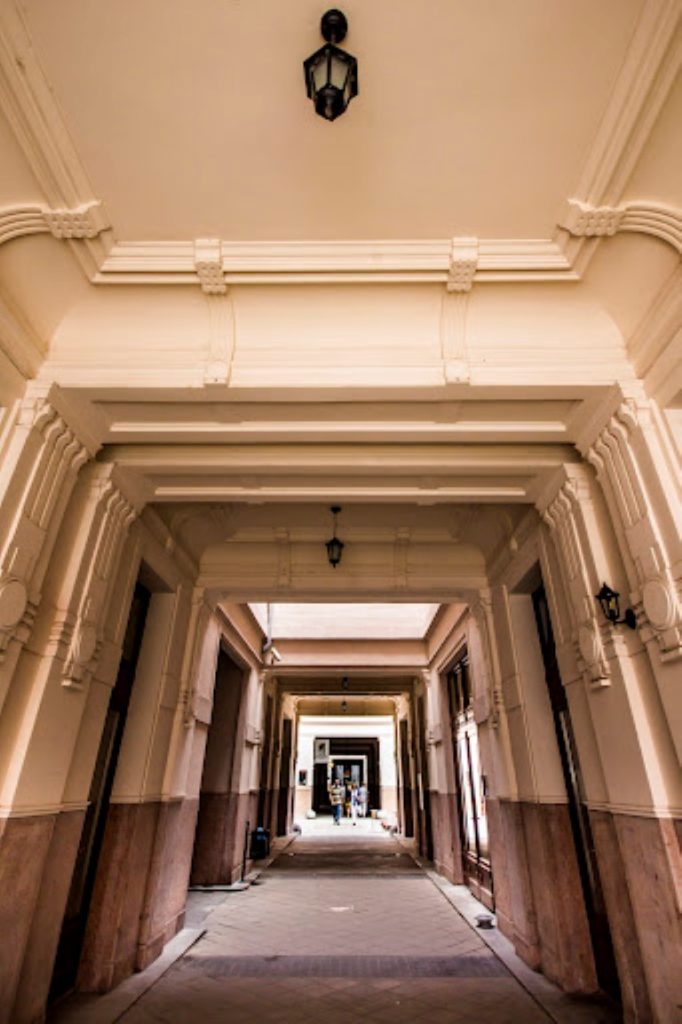
The layout was quite clever. Instead of simply building another row of apartments along the street, Czigler created a series of connected courtyards. The arrangement allowed the apartments to receive more light and air, while the ground floors could accommodate shops and workshops.
And that was an important part of the original idea. Gozsdu Courtyard was designed to be a place where people actually lived, worked and traded, not a nightlife destination.
From the beginning, the courtyards were closely connected to the commercial and community life of the surrounding Jewish Quarter. Shops, workshops and small businesses filled the passage, while the interconnected courtyards created a unique pedestrian route between the two streets.
In other words, the Gozsdu Courtyard we know today may look very different from the original one, but the idea of the place as a lively passage through the city is actually more than a century old.
My Gozsdu Courtyard
My relationship with Gozsdu Courtyard is much more personal than simply being a place I recommend to visitors.
When I was working at an American law firm in downtown Budapest, I used to go to a gym in Gozsdu Courtyard for BodyART classes after work. It was one of those little routines that became part of my everyday life without me really thinking about it at the time.
My now-husband was working with his band at a restaurant nearby, although back then he was still just my boyfriend. Quite often, our evenings ended around the same time.
He would come and pick me up after my workout, and instead of going straight home, we’d usually throw ourselves into the evening.
We’d grab something to eat, sit down somewhere for a drink, or simply wander around and find a place to relax after a long day. It became one of those places where we could switch off from work and just enjoy being together.
And even though so much has changed since then, I still love coming back to Gozsdu. The individual restaurants, cafés and bars may come and go, and the place never seems to stay exactly the same for very long. But the atmosphere is remarkably consistent.
There is always movement, people coming and going, conversations spilling into the courtyards, and that feeling that something is happening around you. I love that buzz.
And I especially love Gozsdu in December, when the courtyards are lit up for Christmas and the whole place takes on a completely different atmosphere.
For me, that’s the real charm of Gozsdu Courtyard. It has changed enormously over the years, but somehow it has remained a place I always enjoy coming back to.
From a Bustling Passage to a Forgotten Place
For decades, Gozsdu Courtyard was much more than a shortcut between two streets. People lived in the apartments above, while the interconnected courtyards formed an important part of everyday life in the neighborhood.
Then came the Second World War.
Gozsdu Courtyard found itself inside the Budapest Jewish Ghetto, and the buildings became part of one of the darkest chapters in the city’s history. The courtyards that had once been filled with everyday life suddenly became part of a very different reality.
After the war, the character of the area gradually changed. The courtyards lost much of their former commercial importance, and over the following decades the buildings became increasingly neglected.
By the end of the 20th century, Gozsdu Courtyard was a very different place from the lively passageway it had once been. And this is actually the Gozsdu I remember.
Before the renovation, there was something wonderfully imperfect about it. The buildings were worn, some parts felt almost forgotten, and the courtyards had a slightly faded atmosphere that made you wonder about all the people who had passed through them before.
It certainly wasn’t the polished downtown destination it is today. But perhaps that’s exactly why I loved it.
There was something about walking through those old courtyards that made you feel you were discovering a little piece of Budapest that hadn’t yet been completely transformed. And then, gradually, everything started to change.
The courtyards also have a connection to Budapest’s film history, as I explore in Budapest in the Movies.
The Transformation of Gozsdu Courtyard
By the early 2000s, Gozsdu Courtyard was entering a completely new chapter.
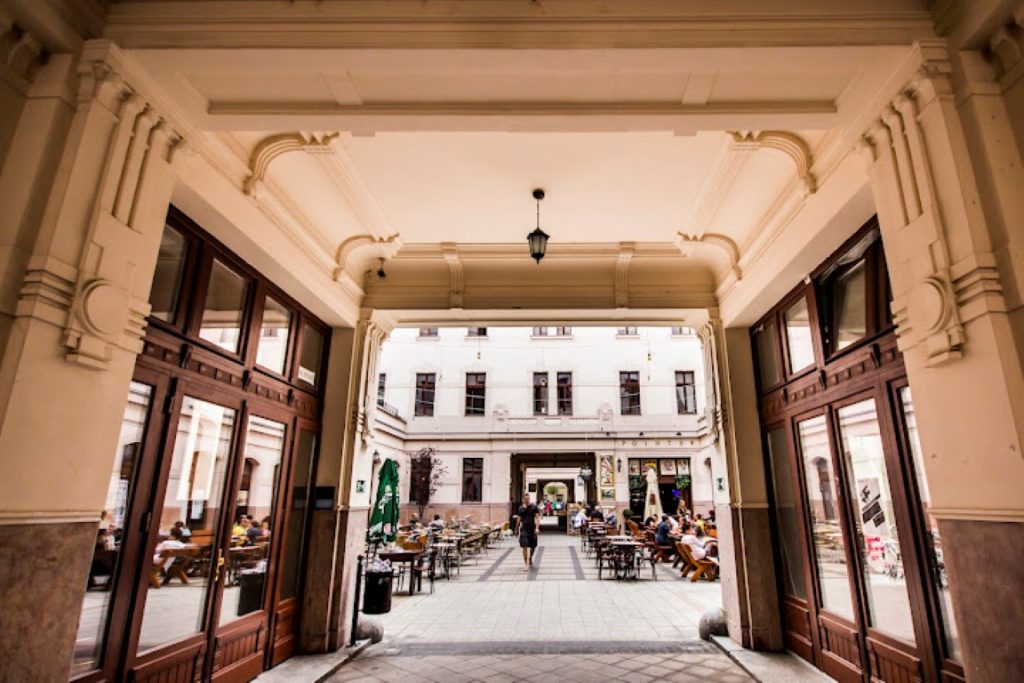
After decades of neglect, the buildings were gradually restored, and the courtyards were brought back to life. What had once been a fading and largely overlooked part of the Jewish Quarter began attracting new businesses, visitors and, eventually, a completely new generation of Budapest residents and travelers.
The change was remarkable. The old passageway was no longer simply somewhere you walked through. It became somewhere you came to spend time.
Today, Gozsdu Courtyard stretches through six interconnected courtyards between Király Street and Dob Street, creating a pedestrian route through one of the busiest parts of the city center.
During the day, it can feel surprisingly relaxed. By evening, the atmosphere changes completely as people arrive to meet friends, have dinner, grab a drink or simply wander through the courtyards.
And that is probably one of the reasons Gozsdu has become such a recognizable part of Budapest. It doesn’t really have one single identity.
Today, Gozsdu Courtyard has many faces. It can be a place for a casual afternoon, a night out, or a visit to the Gozsdu Weekend Market, where you can browse handmade crafts, design pieces and vintage treasures. It can also serve as a shortcut through the neighborhood.
The businesses themselves may change, but the basic idea remains remarkably similar to what Czigler designed more than a century ago: a series of courtyards connecting people, businesses and the surrounding streets.
And perhaps that is why, despite all the changes, Gozsdu still feels familiar to me.
Visiting Gozsdu Courtyard
Gozsdu Courtyard is right in the heart of Budapest’s Jewish Quarter, between Király Street and Dob Street, and it’s easy to reach on foot from many of the city’s central sights.
If you’re exploring the Jewish Quarter, it’s an easy place to add to your walk. You don’t really need a plan either. Just walk in and see where the courtyards take you.
And if you visit at different times of day, you’ll probably see a completely different side of it each time.
A Place I Keep Coming Back To
I think that’s what I like most about Gozsdu Courtyard. I’ve known it in several different versions. I’ve walked through it when it was quiet and slightly worn, spent evenings there with my future husband after work, and watched it gradually become one of the liveliest places in central Budapest.
Today, I still love walking through its courtyards. Not because of any particular restaurant or bar. Those will probably change again anyway. I come back for the atmosphere.
For the lights at Christmas, the people, the noise, the movement and that feeling that something is always happening around you.
Gozsdu has changed a lot over the years. But perhaps that’s the most Budapest thing about it.
If you enjoyed this blog post, follow me on Facebook, Instagram, and other social media for more updates and behind-the-scenes content. For even more inspiration, check out my constantly updated Pinterest boards, where I share ideas, recipes, travel tips, and more!